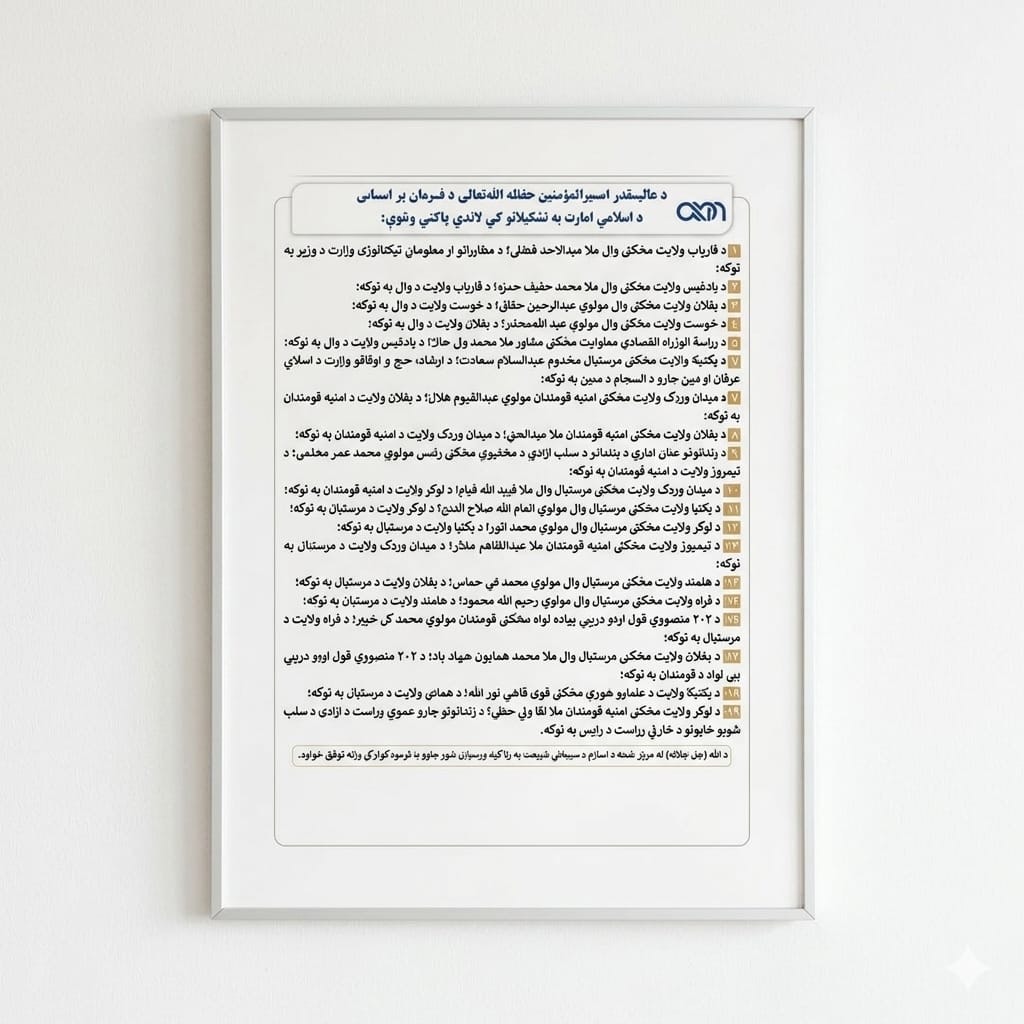
In the latest decree by the leader of the Taliban, once again 19 senior officials across the country have been transferred from one position to another; changes that, according to observers, resemble a rotation of seats among previous officeholders rather than the introduction of new faces.
In a statement issued by Zabihullah Mujahid, the Taliban spokesperson, it was announced that Mullah Abdul Ahad Fazli has been appointed from Faryab province to the Ministry of Communications and Information Technology, while Mullah Mohammad Hanif Hamza has been transferred from Badghis to Faryab.
Similarly, for the provinces of Khost, Baghlan, Maidan Wardak, and Logar, individuals have been appointed who previously held the same positions in other provinces, a practice that further underscores the repetitive nature of these changes.
Following the announcement of these appointments, widespread reactions have emerged on social media. Some users and analysts say that such changes, instead of representing real reforms, are merely an attempt to maintain power among a limited number of individuals.
Critics emphasize that despite the presence of professional and educated individuals in the country, key positions continue to circulate among a few specific people. They believe this approach not only raises questions about the efficiency of the administrative system but also leads to the overlooking of capable talents.
Among the public, concern has also grown as to why, instead of utilizing thousands of professional and unemployed Afghans, the same limited individuals are repeatedly appointed to top positions.
Writer:Saeed Sameer