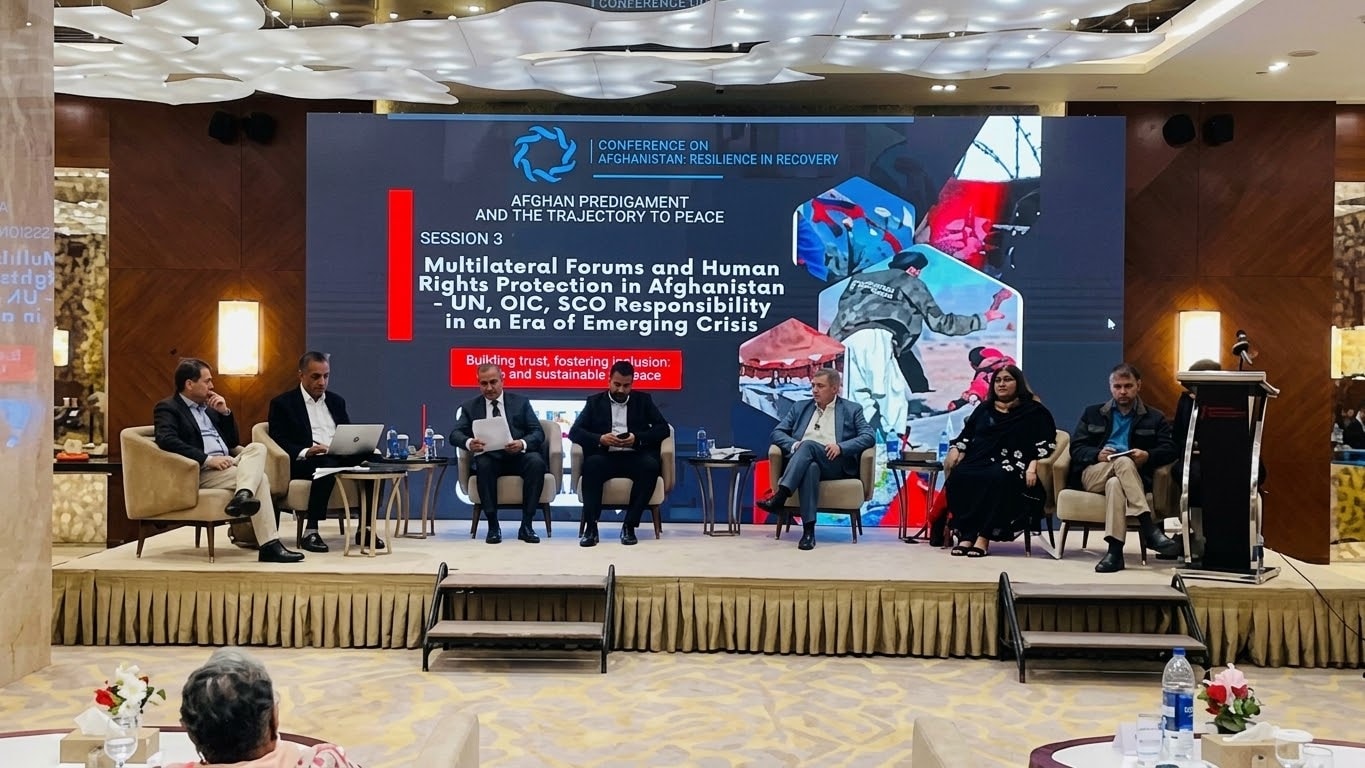
Participants at a political conference on Afghanistan in Islamabad said that the Taliban government faces serious challenges in terms of legitimacy, governance capacity, and political participation, arguing that the current structure does not represent all Afghans.
The conference, titled “The Afghanistan Crisis and the Path to Peace,” was held on September 29. In its final declaration, participants called for the establishment of an “inclusive, balanced, and modern” system of governance.
The declaration also criticized the Taliban’s restrictions on the education, employment, and social participation of women and girls, stating that the exclusion of women and minorities from political participation constitutes an obstacle to Afghanistan’s stability and development. Participants further called for reforms to the education system, including the integration of religious education with science, technology, and vocational training.
On security, the organizers expressed concern over the activities of armed groups in Afghanistan and claimed that more than 20 such groups have bases in the country. The Taliban have repeatedly denied the presence of terrorist groups in Afghanistan and rejected allegations that Afghan territory is being used against other countries.
The declaration also called for joint monitoring by the United Nations, the Organization of Islamic Cooperation, and the Shanghai Cooperation Organization of commitments aimed at preventing armed groups from operating in Afghanistan, maintaining safe havens, or receiving financial support.
Participants urged the international community to condition future engagement with the Taliban on criteria including women’s access to education and employment, political participation, respect for citizens’ rights, and efforts to combat armed groups. They also emphasized the need for greater transparency in the distribution of humanitarian aid.
The declaration concluded by stating that the crisis in Afghanistan is not solely a matter of governance within the country, but also involves regional and international responsibilities.
Writer:Roya Stanikzai