Nasrullah Baloch, head of the group advocating for missing persons in Balochistan, says that cases involving the enforced disappearance of around 17,000 people from various social backgrounds in the province have been registered with the Voice for Baloch Missing Persons (VBMP).
Baloch says the International Day of the Victims of Enforced Disappearances is being observed in Balochistan at a time when the families of missing persons are facing severe psychological pressure and fear.
According to him, the Voice for Baloch Missing Persons has been campaigning for justice for the families of victims of enforced disappearances for the past 17 years. This year, the group has also organized a protest outside the Quetta Press Club to mark the occasion.
Baloch added that they are concerned that security pressure on protesters could increase or that cases could be filed against them. However, he said, the families of missing persons remain determined not to give up their demands.
Referring to a case within his own family, he said that his uncle has been missing since 2001, meaning that 25 years have passed since his enforced disappearance.
Nasrullah Baloch claims that courts have issued orders for hundreds of people who have been missing for years to be produced before them. However, in some cases, even after five, seven, or more years have passed since the cases were filed, these court orders have still not been implemented.
The head of the group advocating for missing persons in Balochistan says enforced disappearances affect not only the victims but also have profound psychological and financial consequences for their families.
According to him, the wives, children, mothers, and fathers of missing persons are forced to live for years with uncertainty about the fate of their loved ones. He said children grow up without the presence of their fathers and, in some cases, are even forced to drop out of school.
Baloch added that the families of missing persons continue to wait every day for their loved ones to return. Every knock on the door or unfamiliar sound gives them hope that perhaps the missing person has finally come back.
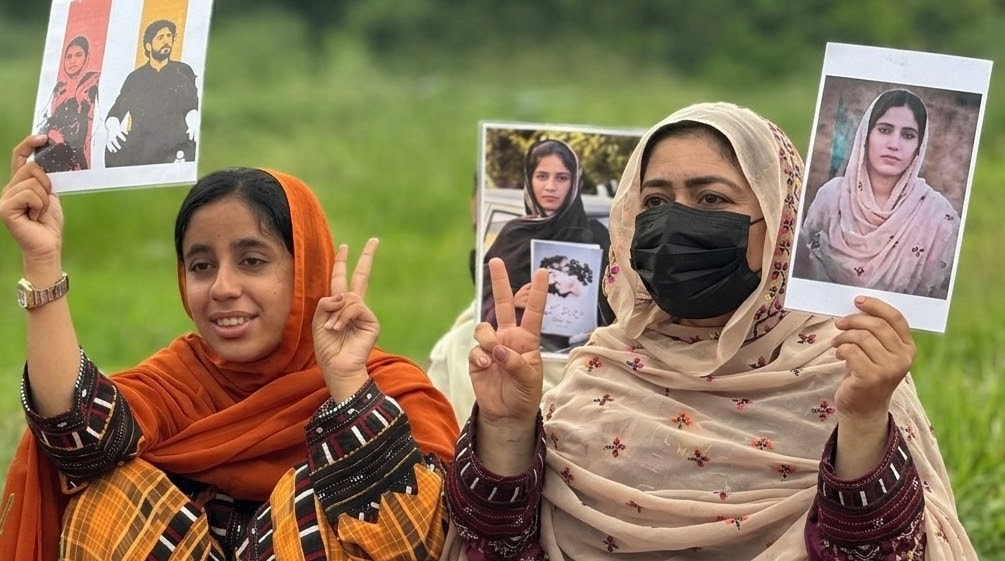
He says the protest camps set up by the families of missing persons are not merely places of protest; seeing photographs of their loved ones also brings their past pain and psychological suffering to the surface once again.
Nasrullah Baloch added that they have witnessed families holding photographs of their missing children close to their chests and breaking down in tears. In some cases, family members—particularly mothers—have even lost consciousness as a result of severe psychological trauma.
Writer:Saeed Sameer