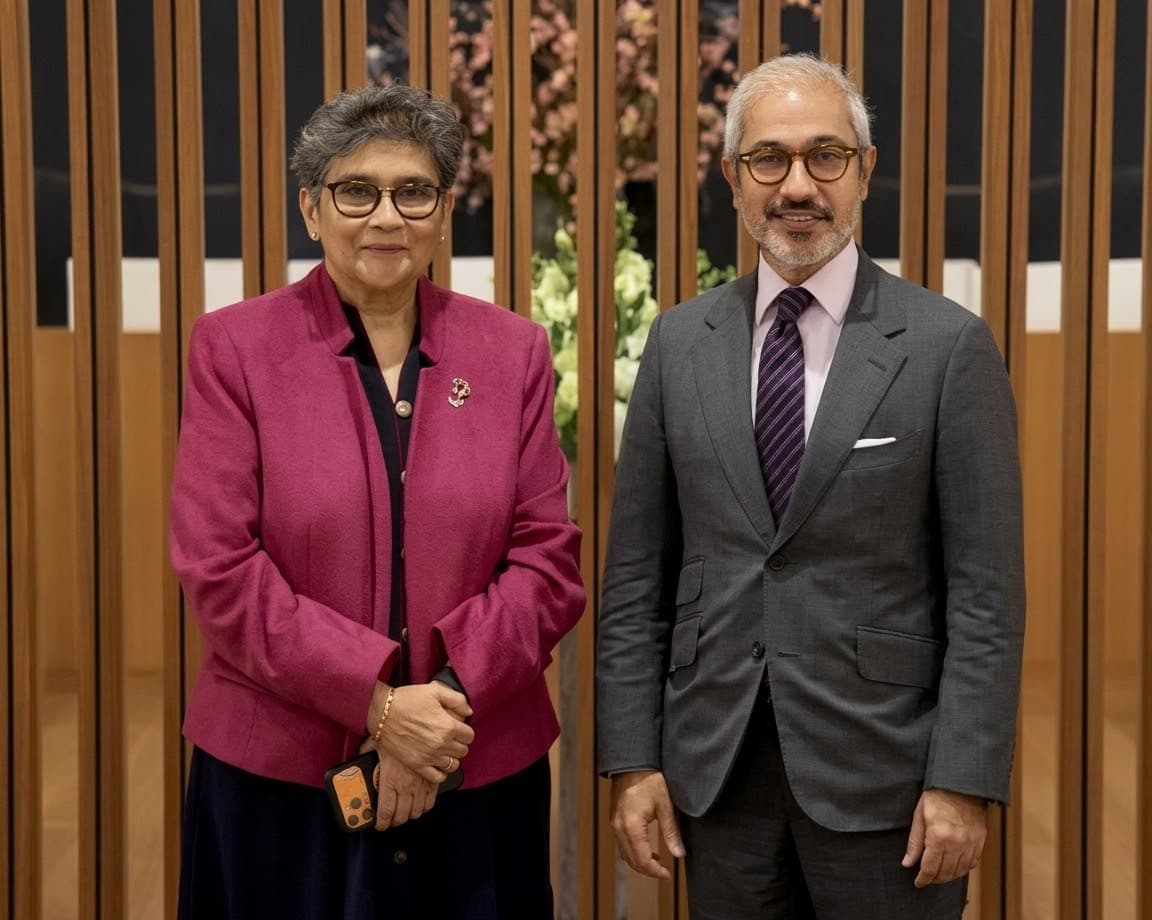
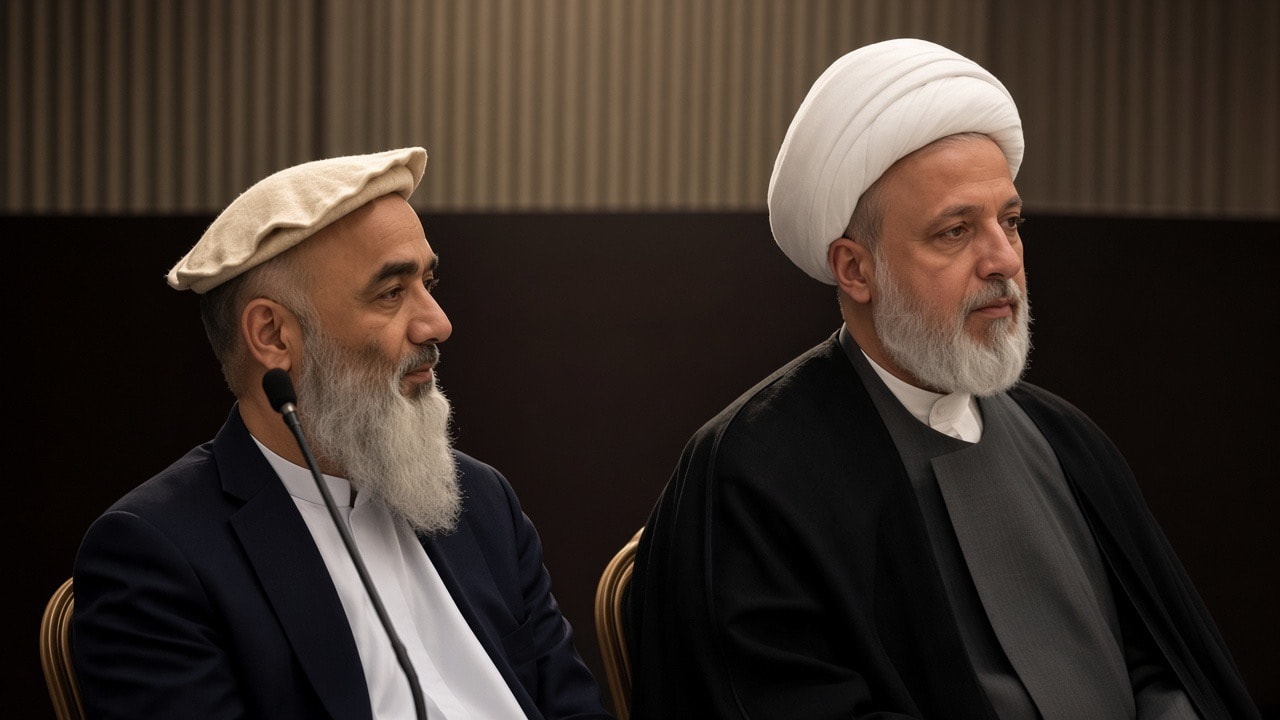
Iran invited Mawlawi Habibullah Hassam, a member of the leadership of Afghanistan’s National Resistance Front (NRF), and Jawad Salehi, a member of Afghanistan’s Shia Ulema Council, to a meeting of the Supreme Council of the World Assembly of Islamic Awakening in Tehran. The meeting was held on Friday, August 28, under the title “The Palestine Issue in the Thought of the Martyr Imam of the Ummah.” According to the Iranian news agency Fars, 27 foreign guests from Afghanistan and several other countries attended the meeting.
Mawlawi Habibullah Hassam is the head of the Ulema Council of the National Resistance Front, led by Ahmad Massoud. Before the fall of the Islamic Republic, he served as the head of Afghanistan’s Ulema Council. Following the Taliban’s return to power, he has been living in Iran. His participation in the meeting comes as Iran continues to maintain political, economic, and diplomatic relations with the Taliban authorities.
Jawad Salehi is also a member of Afghanistan’s Shia Ulema Council and the director of the Resalat Islamic Seminary in Kabul. He attended the meeting of the Supreme Council of the World Assembly of Islamic Awakening in Tehran alongside Mawlawi Habibullah Hassam. The meeting focused primarily on the Palestine issue, developments in the region, and ways of supporting the Palestinian people.
Iranian media reported that discussions on the Palestine issue, recent developments involving Iran-backed groups in the Middle East, and ways to support the Palestinians were among the key topics of the meeting. Representatives from more than 20 countries, including Afghanistan, Pakistan, India, Russia, Turkey, Iraq, Lebanon, Egypt, Syria, Yemen, Bahrain, and Indonesia, participated in the gathering.
Iran’s invitation to a member of the leadership of the National Resistance Front comes at a time when Tehran maintains close relations with the Taliban. Officials from the two sides have held numerous meetings and exchanged visits in recent years, discussing political, economic, security, and border-related issues. However, Iran has not formally recognized the Taliban government.
In July this year, Iran also invited Ahmad Massoud, the leader of the National Resistance Front of Afghanistan, and Mohammad Mohaqiq, leader of the People’s Islamic Unity Party of Afghanistan, to the farewell ceremony and funeral of Ali Khamenei. A Taliban delegation headed by Mullah Abdul Ghani Baradar, and including the group’s Foreign Minister Amir Khan Muttaqi, also attended the ceremony.
During the introduction of Ahmad Massoud’s delegation, the ceremony’s presenter referred to Massoud and his companions as the “High-Level Delegation of the Afghan Resistance.” The event was described as the first official and public appearance of leaders opposed to the Taliban at an Iranian state ceremony in five years, and it received widespread attention among Afghanistan’s political circles.
Iran’s invitation to Taliban opponents at the ceremony drew criticism from a number of Taliban officials and supporters. Khairullah Shinwari, an official at the Taliban’s Ministry of Foreign Affairs, said that Iran had hosted individuals who, according to him, challenge Afghanistan’s “national sovereignty and independence.”
Some Taliban supporters also reacted to the presence of the group’s opponents at the Tehran ceremony by describing Iran’s move as an act of “hostility” and “betrayal” against the Taliban. Nevertheless, the continued participation of figures affiliated with various Afghan political and religious currents in Iran’s official meetings and ceremonies indicates Tehran’s engagement with a broad range of Afghan political and religious actors, alongside its efforts to maintain relations with the Taliban.
Writer:Salima Aryaei