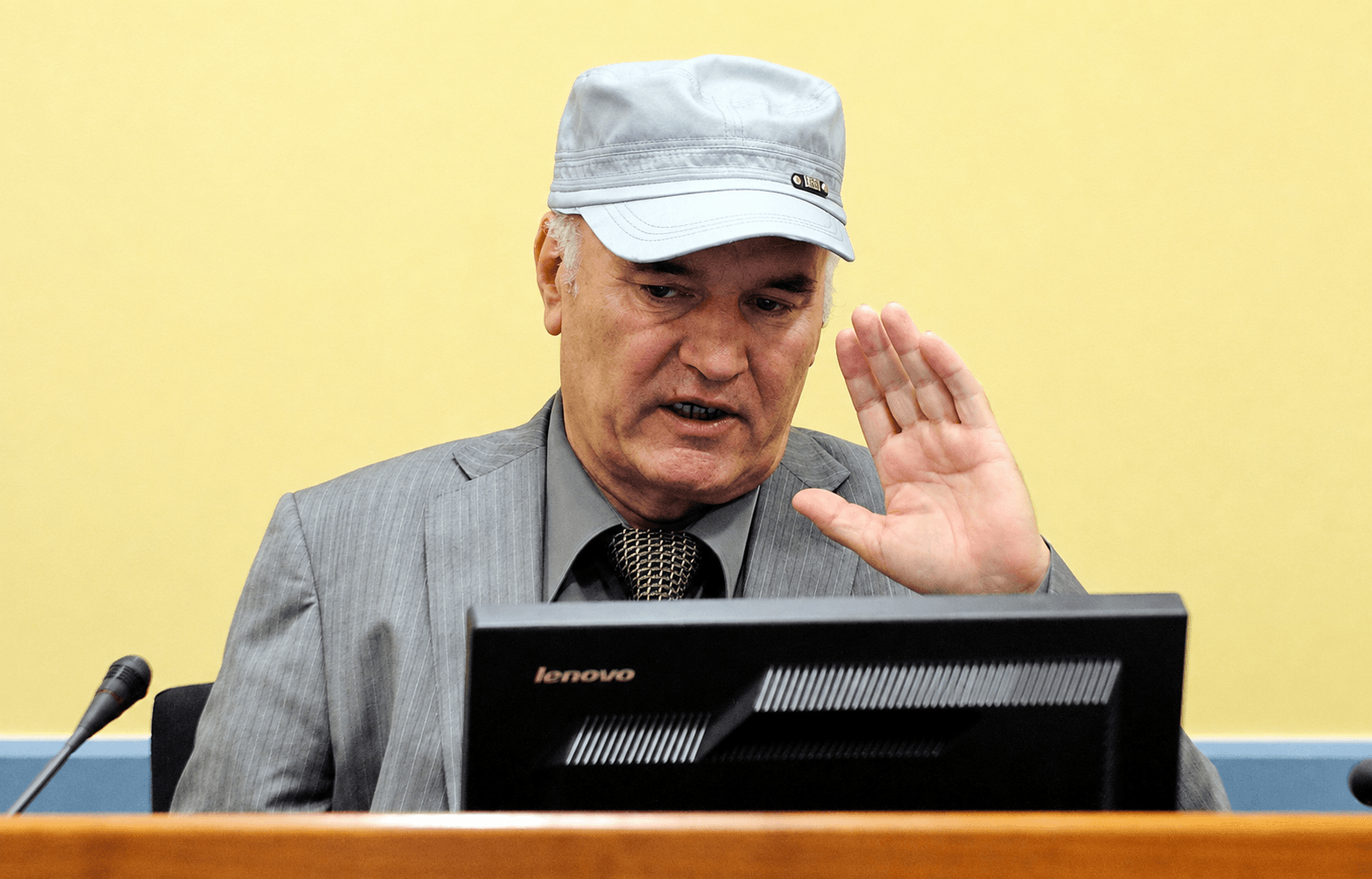
Ratko Mladić, the former commander of the Bosnian Serb forces who was sentenced to life imprisonment for genocide and war crimes, has died while in United Nations custody in the Netherlands. He was widely known by critics as the “Butcher of Bosnia” for his role in the killing of thousands of Bosnian Muslims in 1995 and deadly attacks on the city of Sarajevo.
Mladić was sentenced to life imprisonment in 2017 by the International Criminal Tribunal for the former Yugoslavia (ICTY) in The Hague. The court found him guilty of several charges, including genocide, crimes against humanity, and violations of the laws of war. The verdict was upheld on appeal in 2021, making his life sentence final.
After the end of the Bosnian War in 1995, Mladić remained in hiding from authorities for about 16 years. He was eventually identified and arrested in 2011 in a rural area of Serbia and subsequently transferred to The Hague in the Netherlands. He had been held at a United Nations detention facility there since his transfer.
In recent days, Mladić had been receiving treatment at a hospital within the UN detention center due to his deteriorating health. His death was first reported by Serbian media, after which a UN official also confirmed it. No further details about the exact cause of death were initially released.
In May this year, the Hague tribunal rejected a request for Mladić’s release on medical grounds. At the time, a judge described his physical condition as “critical,” but said that he was receiving comprehensive and appropriate medical care in detention and that there were no grounds for his release.
Ratko Mladić was one of the key figures in the bloody conflicts that accompanied the breakup of the former Yugoslavia during the 1990s. He commanded the Bosnian Serb forces, which fought against Bosnian Croat and Muslim forces during the Bosnian War from 1992 to 1995.
Forces under Mladić’s command were accused and, in various cases, convicted of widespread ethnic cleansing, the killing of civilians, and other war crimes. During the conflict, Bosnian Serb forces also besieged the city of Sarajevo for several years, a siege that resulted in the deaths of more than 10,000 people.
One of the most significant crimes linked to forces under Mladić’s command was the 1995 Srebrenica massacre. In the massacre, around 8,000 Bosniak Muslim men and boys were killed. International courts have determined that the massacre constituted genocide, and Mladić’s role in the killings was a central element of the case against him.
Writer:Salima Aryaei