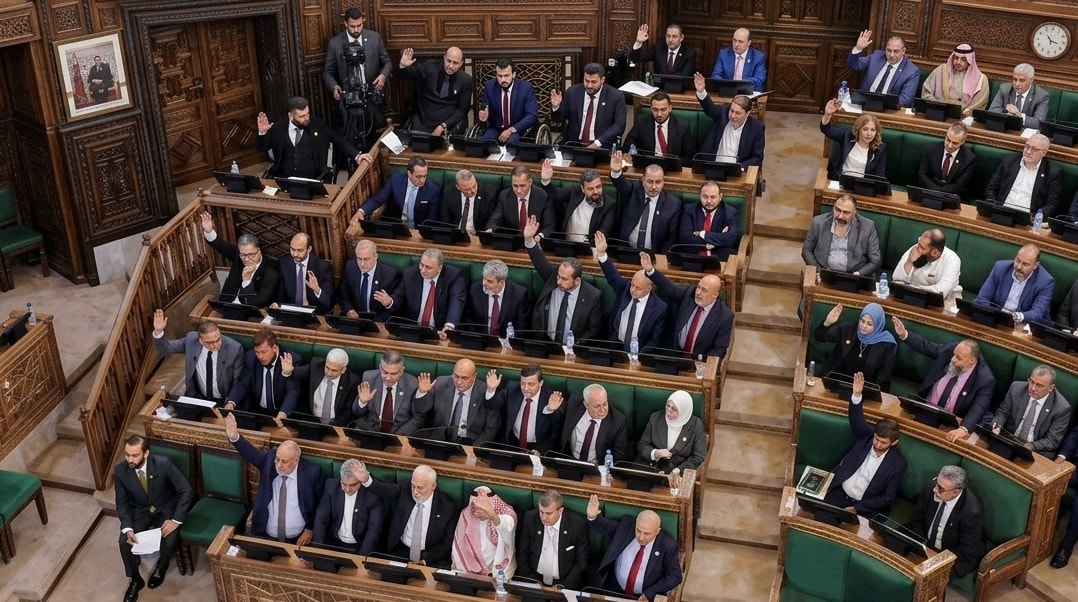
Syria’s new parliament convened for the first time in Damascus on Sunday, July 12, marking its inaugural session 19 months after the fall of Bashar al-Assad’s government to opposition forces led by Ahmed al-Sharaa. The meeting has been widely described as a significant step in the country’s political transition.
In his address to lawmakers, Syrian President Ahmed al-Sharaa urged members to make the parliament “a model of responsibility and competence.” He also described the legislature as “a platform for truth and justice,” saying that Syria is writing a new chapter in its history one that reflects the sacrifices and resilience of its people.
The Syrian parliament consists of 210 seats. Under the transitional governance framework, two-thirds of the members were selected through regional electoral councils, while President al-Sharaa appointed the remaining one-third on July 1.
Syrian officials have said this arrangement was adopted because years of war, the displacement of millions of people, and the absence of accurate population data and voter rolls have made nationwide elections impractical. Critics, however, argue that the process has given the executive branch significant influence over the composition of parliament.
Under the temporary constitutional declaration adopted in 2025, parliament’s powers are limited, and the government is not required to obtain a vote of confidence before taking office. Nevertheless, the legislature has the authority to propose and pass laws and will serve as the country’s legislative body until a permanent constitution is drafted and nationwide elections are held.
During the parliament’s inaugural session, Abdelhalim al-Awwak was elected speaker with 99 votes. President al-Sharaa had previously announced that the new parliament would be responsible for establishing a committee to draft Syria’s new constitution.
The new parliament includes 21 women, 15 of whom were appointed by President al-Sharaa. Syrian authorities have not yet released official data on the ethnic and religious composition of the legislature. However, unofficial estimates indicate that at least 10 seats are held by representatives of ethnic and religious minorities, including Kurds, Christians, and Alawites.
Four parliamentary seats remain vacant. One seat became vacant following the death of a representative, while the remaining three, allocated to the predominantly Druze governorate of Suwayda, have yet to be filled. Syrian officials said the selection of representatives from the governorate has been postponed until conditions are deemed suitable.
Suwayda has not been fully brought under government control since last year’s deadly clashes between government forces and Druze armed groups. According to the United Nations, those clashes left approximately 1,700 people dead.
Writer:Salima Aryaei