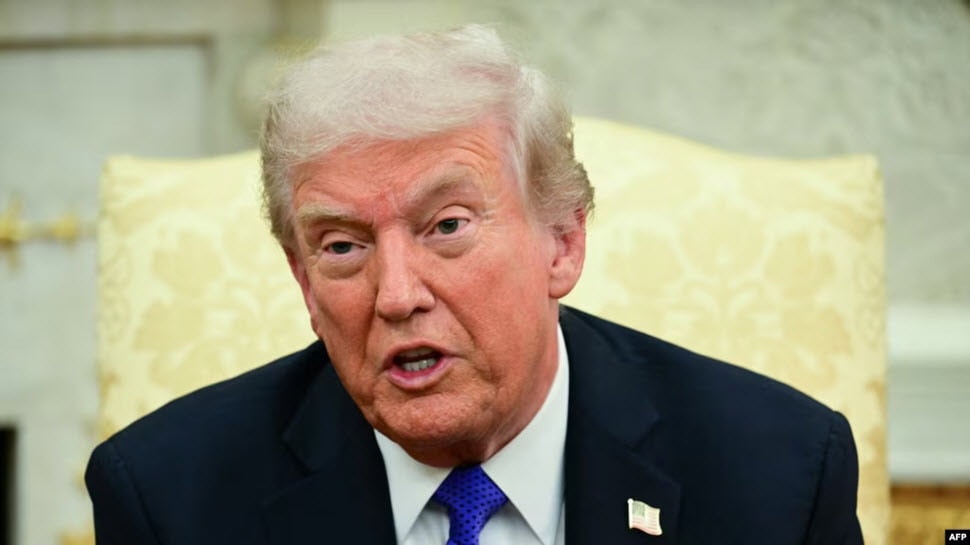
Three judges of the International Criminal Court (ICC) have filed a lawsuit in a New York court against Donald Trump, the President of the United States, over an executive order imposing sanctions on officials of the court who have been involved in cases related to Afghanistan and Palestine.
According to a complaint filed on Wednesday with the United States District Court for the Southern District of New York, Kimberly Prost, Solomy Balungi Bossa, and Reine Alapini-Gansou argue that Trump’s executive order, issued in February 2025, exceeds presidential authority and is inconsistent with U.S. domestic law and the country’s international obligations.
The order was issued after the ICC issued an arrest warrant for Israeli Prime Minister Benjamin Netanyahu and continued its investigations into alleged war crimes committed by U.S. forces in Afghanistan. The Trump administration declared a national emergency and imposed sanctions on ICC officials involved in these cases.
The complaint states that the executive order violates the International Emergency Economic Powers Act, the National Emergencies Act, the Fifth Amendment to the U.S. Constitution, and the Administrative Procedure Act. The plaintiffs argue that the President does not have legal authority to impose such sanctions on judges and prosecutors of an international judicial body.
The three judges also stated that the sanctions have had far-reaching consequences for them and other ICC officials. According to them, these include travel bans, asset freezes, restricted access to technology platforms, and the closure of bank accounts.
Kimberly Prost of Canada, Solomy Balungi Bossa of Uganda, and Reine Alapini-Gansou of Benin are among those affected by the sanctions. This marks the first time ICC judges have directly challenged Trump’s sanction order in court, although five other lawsuits had already been filed against it.
Trump stated when issuing the order that the United States and Israel are not parties to the Rome Statute and therefore do not fall under the ICC’s jurisdiction. He also claimed that the court’s actions threaten U.S. sovereignty and that individuals involved in these cases pose an “unusual and extraordinary” threat to U.S. national security.
The ICC was established in 2002 under the Rome Statute and has jurisdiction over genocide, war crimes, crimes against humanity, and the crime of aggression. Although the United States is not a party to the treaty, it has previously supported the court in certain international cases.
The sanctions order has also drawn criticism from human rights organizations and legal groups, which argue that targeting ICC judges and prosecutors undermines judicial independence and the international justice system. James A. Goldston, Executive Director of the Open Society Justice Initiative, described the move as an “unprecedented attack on judicial independence and the rule of law.”
Writer:Salima Aryaei