The Wakhan Corridor, located in the northeastern part of Afghanistan’s Badakhshan Province, holds particular strategic importance for the country’s national sovereignty, regional security, and economic cooperation due to its unique geographical position. The corridor connects Afghanistan with China and offers potential opportunities for expanding regional connectivity and trade among Central, South, and East Asia.
Wakhan is not merely a geographical region; it can also be regarded as an important component of Afghanistan’s regional connectivity, economic development, and expanding relations with neighboring countries. However, effectively leveraging this geographical position requires a clear, long-term strategy grounded in national interests.
Strategic Opportunities and Constraints
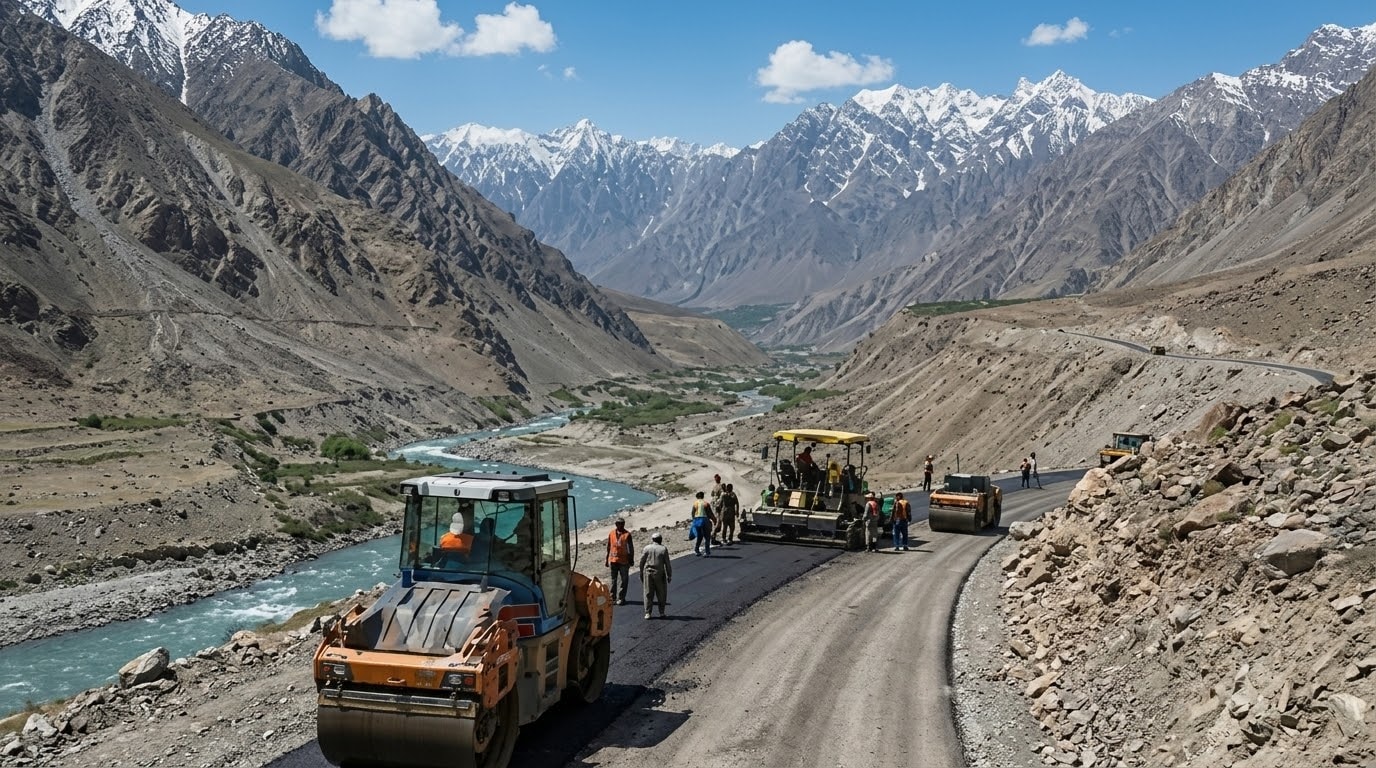
Constructing a road through the Wakhan Corridor could represent an important step toward expanding trade and transportation links between Afghanistan and China. The operationalization of this route could create new opportunities for Afghanistan by facilitating the movement of goods, expanding commercial relations, and strengthening regional connectivity.
However, the construction of a road alone does not mean that a functional trade corridor will be established. The opening of the border by China, the provision of customs and transportation facilities, the signing of necessary bilateral agreements, and the maintenance of sustained security are among the key conditions that will determine the project’s practical value.
Furthermore, Wakhan’s challenging mountainous terrain, long and harsh winters, difficult geographical conditions, and high construction costs pose significant obstacles to the extensive commercial use of this route. Therefore, exaggerated claims about the corridor’s economic potential should be avoided, and all decisions should be based on realistic assessments of available resources, implementation costs, and potential benefits.
Despite these constraints, the Wakhan Corridor offers significant long-term opportunities for regional connectivity and could play a constructive role in expanding Afghanistan’s economic relations.
Security and National Sovereignty
Security in Wakhan extends beyond border protection. It also encompasses safeguarding Afghanistan’s territorial integrity, preventing illicit activities, strengthening regional stability, and protecting the rights of local communities.
Afghanistan should establish clear principles and a well-defined framework for security cooperation with neighboring countries. The security concerns of any foreign country must not be used as a justification for restricting Afghanistan’s national sovereignty or independent decision-making. At the same time, assessments of potential security threats should be based on credible evidence and responsible analysis rather than rumors or unfounded allegations.
Every strategic decision concerning Wakhan should be guided by Afghanistan’s national interests, compliance with applicable laws, and transparency in international agreements. Any agreement with foreign countries or companies must include appropriate safeguards to protect Afghanistan’s independence, territorial integrity, and economic interests.
Afghanistan should also diversify its trade routes and avoid becoming overly dependent on any single corridor. Maintaining balanced relations with China, Central Asia, Iran, Pakistan, and other regional and international partners could expand the country’s economic opportunities and reduce potential disruptions to trade.
The Rights of the People of Wakhan and Environmental Protection
The primary measure of development in Wakhan should not be limited to road construction and increased trade. Improving the living conditions of local residents must also be a fundamental objective of every development project.
Access to healthcare, education, clean drinking water, electricity, telecommunications, and employment opportunities represents some of the most important needs of the people of Wakhan. If development projects are implemented in the region, particular attention should be given to improving local living standards, strengthening economic opportunities, and addressing the social needs of the population.
Furthermore, Wakhan’s natural environment, water resources, grazing lands, and wildlife habitats must be protected. Before major infrastructure and economic projects are implemented, their environmental and social impacts should be assessed to ensure that the region’s natural resources and local livelihoods are not harmed in pursuit of short-term economic gains.
Local communities should play an active role in decision-making processes that affect their land, livelihoods, traditions, and economic resources. Implementing development projects without meaningful public participation may lead to social tensions and other challenges. Accordingly, community consent and the protection of local rights should be fundamental principles governing every project.
A Practical Strategy for Afghanistan
Afghanistan needs to develop a comprehensive, long-term national strategy for Wakhan that addresses security, economic development, regional relations, local rights, and environmental protection in an integrated manner.
Afghanistan should engage in clear and practical negotiations with China concerning border opening arrangements, trade, transportation, security cooperation, and project costs. Bilateral agreements should be based on mutual interests and should establish specific conditions, clearly defined responsibilities, and appropriate guarantees to ensure effective implementation.
Agreements with foreign governments and companies should be transparent and incorporate the necessary legal safeguards to protect Afghanistan’s national interests. Strengthening national consensus on Wakhan’s development, improving coordination among relevant institutions, and ensuring the participation of local communities are also of considerable importance.
Afghanistan should seek to transform Wakhan into a platform for economic cooperation and shared benefits rather than allowing it to become a focal point of regional competition. Preventing the corridor from becoming an arena for rivalry among major powers and proxy conflicts is essential to Afghanistan’s long-term stability and the preservation of an independent foreign policy.
Writer:Saeed Sameer