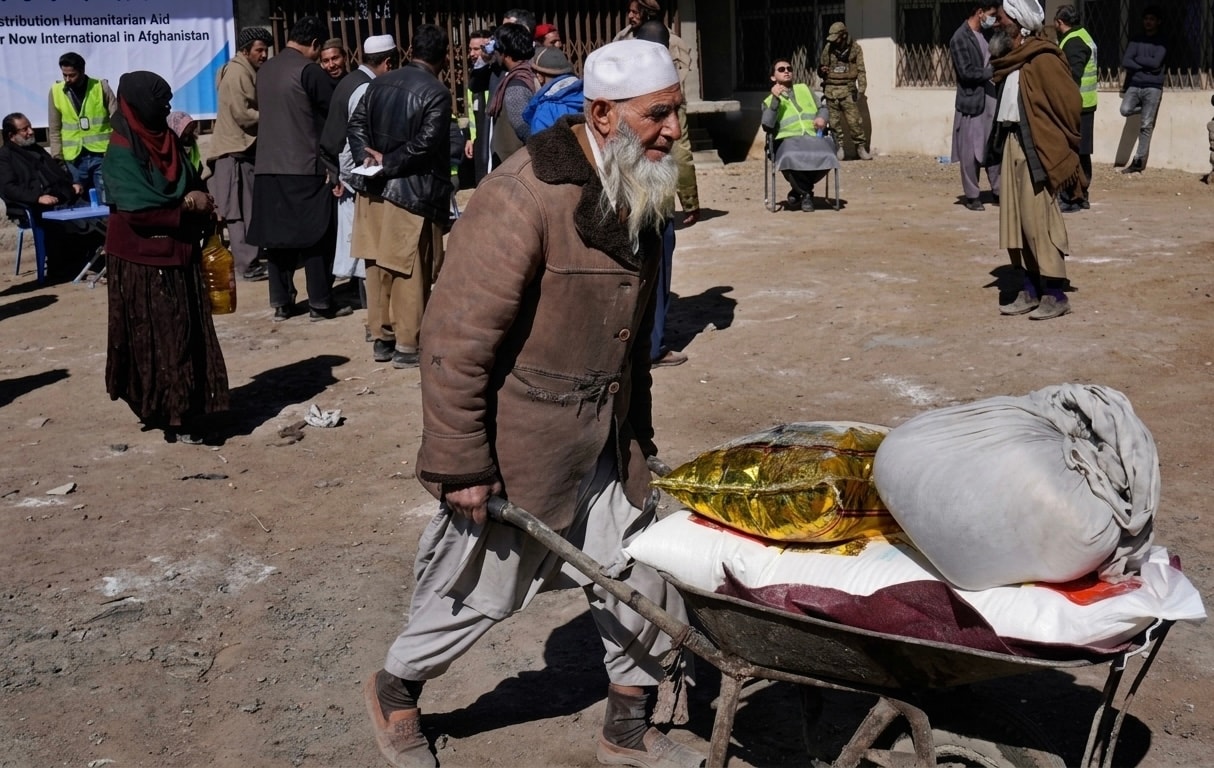
The United Nations Office for the Coordination of Humanitarian Affairs (OCHA) has expressed concern over a sharp decline in financial resources, stating that humanitarian response programs in Afghanistan are facing a severe funding shortfall. This situation could place the lives of millions of vulnerable citizens at even greater risk.
According to OCHA’s published figures, $1.71 billion is required to implement humanitarian programs in Afghanistan in 2026; however, only $292 million equivalent to 17 percent of the total has been secured so far.
OCHA warns that the reduction in international financial support has significantly constrained the capacity of aid agencies to deliver essential services. The organization emphasizes that for millions of families in Afghanistan, today’s humanitarian assistance is a guarantee of survival for tomorrow.
At the same time, recent reports indicate a worsening humanitarian crisis in Afghanistan. The U.S.-based organization “Data for Afghanistan” projects that between April and September of this year, more than 11 million people in Afghanistan will face food insecurity at “crisis” level or worse.
The report states that declining purchasing power, rising unemployment, and ongoing economic challenges have left many families struggling to secure even the most basic food supplies. As a result, millions are now in crisis, emergency, and even catastrophic levels of food insecurity.
Meanwhile, the Norwegian Refugee Council has described Afghanistan as one of the most underfunded humanitarian crises in the world in 2026, noting that less than one-fifth of the required funding for relief programs has been received to date.
The United Nations estimates that 21.9 million people in Afghanistan will depend on humanitarian assistance to meet their basic needs this year a figure that underscores the persistence of the humanitarian crisis and the urgent need for immediate international action to prevent further deterioration.
Writer:Salima Aryaei