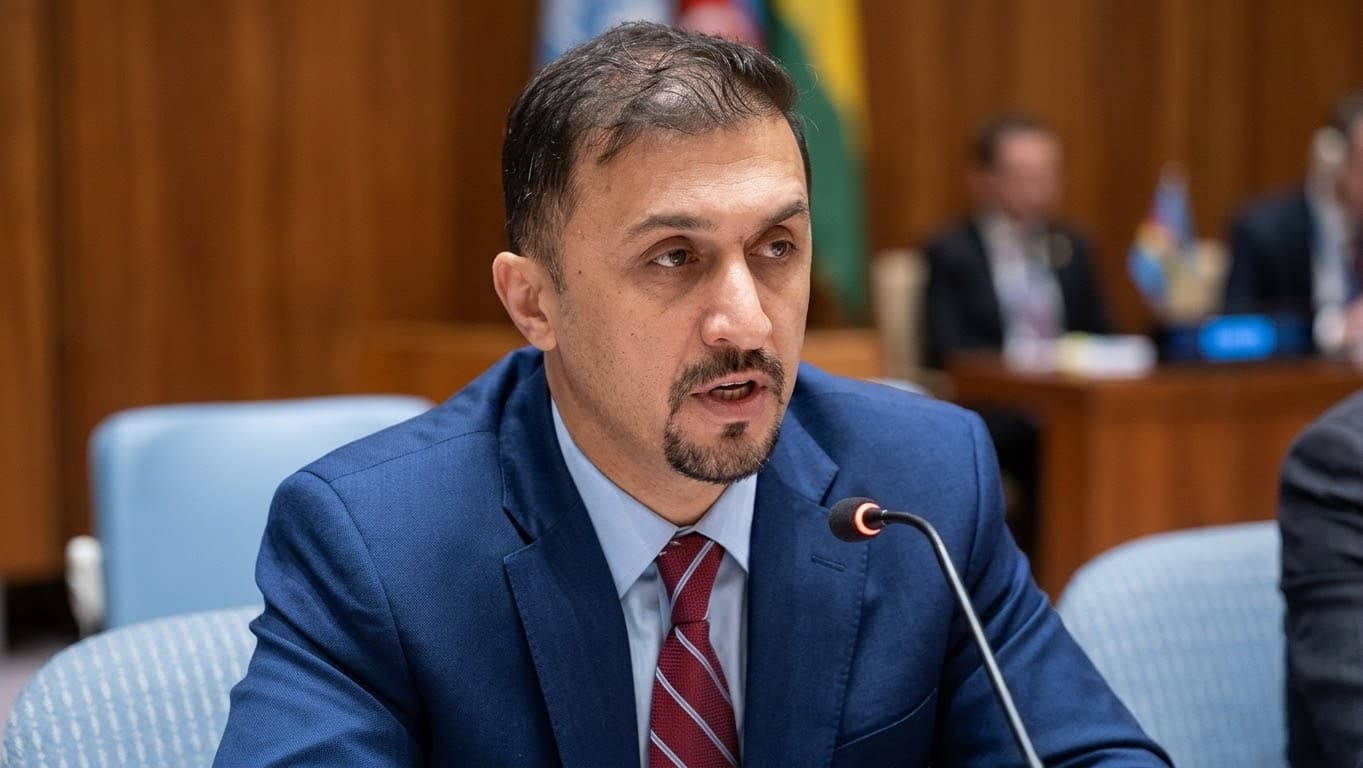
Jamaluddin Hekmatyar, the son of Gulbuddin Hekmatyar, leader of the Hezb-e Islami party in Afghanistan, says local Taliban officials in Imam Sahib district of Kunduz province have seized 25 jeribs of his family’s ancestral agricultural land. He also alleges that, after attempting to investigate the status of the land, he was threatened and detained by armed Taliban members.
In a post published on his Facebook page on Friday, 29 Aqrab, Jamaluddin Hekmatyar wrote that local Taliban officials had informally seized his family’s ancestral and inherited land in Kunduz and transferred control of it to other individuals.
According to him, the seizure took place in Imam Sahib district, where the land was taken out of his family’s ownership without following any legal procedures and through what he described as an informal confiscation.
He added that when he visited the area to investigate the condition of the land and how it was being used, armed Taliban members prevented him from accessing the property, threatened him and took him into custody.
Jamaluddin Hekmatyar further claimed that the district governor of Imam Sahib had acknowledged that armed men had been sent to the location on the instructions of district officials. According to Hekmatyar, these individuals were deployed to intimidate the rightful owners and conceal the land seizure.
He said he had also filed a complaint with the Taliban courts over the matter, but his repeated attempts to pursue the case had so far produced no tangible results.
The son of the Hezb-e Islami leader went on to write that, during previous governments, including the Soviet occupation and the former republic, no one had encroached upon his family’s inherited land. However, he said, these properties are now at risk of being seized.
He described such actions as a means of exerting pressure on property owners, warning that those who attempt to defend their ownership rights may be entangled in unclear judicial proceedings for years and subjected to humiliating treatment.
Jamaluddin Hekmatyar warned that, in his view, the Taliban administration does not guarantee the physical security, financial security or civil rights of citizens, including the right to private property. He added that if the situation continues, his family may also be forced to leave Afghanistan.
He also claimed that reports had previously emerged concerning the seizure of assets belonging to several other members of Hezb-e Islami, alleging that some local officials indirectly benefit from such actions and the revenues generated through them.
The Taliban have not yet responded to Jamaluddin Hekmatyar’s allegations concerning the seizure of his family’s land.
These remarks come after Gulbuddin Hekmatyar travelled to Malaysia, where he voiced strong criticism of the Taliban.
Meanwhile, the Taliban Ministry of Justice has published a new law concerning the assessment of movable and immovable property belonging to absent individuals.
Articles 9, 23 and 28 of the law stipulate that decisions regarding the fate of the assets and revenues belonging to individuals described in the legislation as “Sa’in bil-Fasad” (those striving to spread corruption) are subject to the approval of Taliban leader Hibatullah Akhundzada. These provisions also address the requirement for such individuals to have a legally recognised representative or attorney.
Although the law includes provisions concerning the restoration of usurped houses to their rightful owners, a number of legal experts have expressed concern over the use of the term “Sa’in bil-Fasad”.
According to these experts, the designation could potentially be used against the Taliban’s political and ideological opponents, as well as critics of the group’s policies. They argue that the Taliban have also characterised criticism of their leader and senior officials as a form of corruption and disobedience.
Writer:Roya Stanikzai