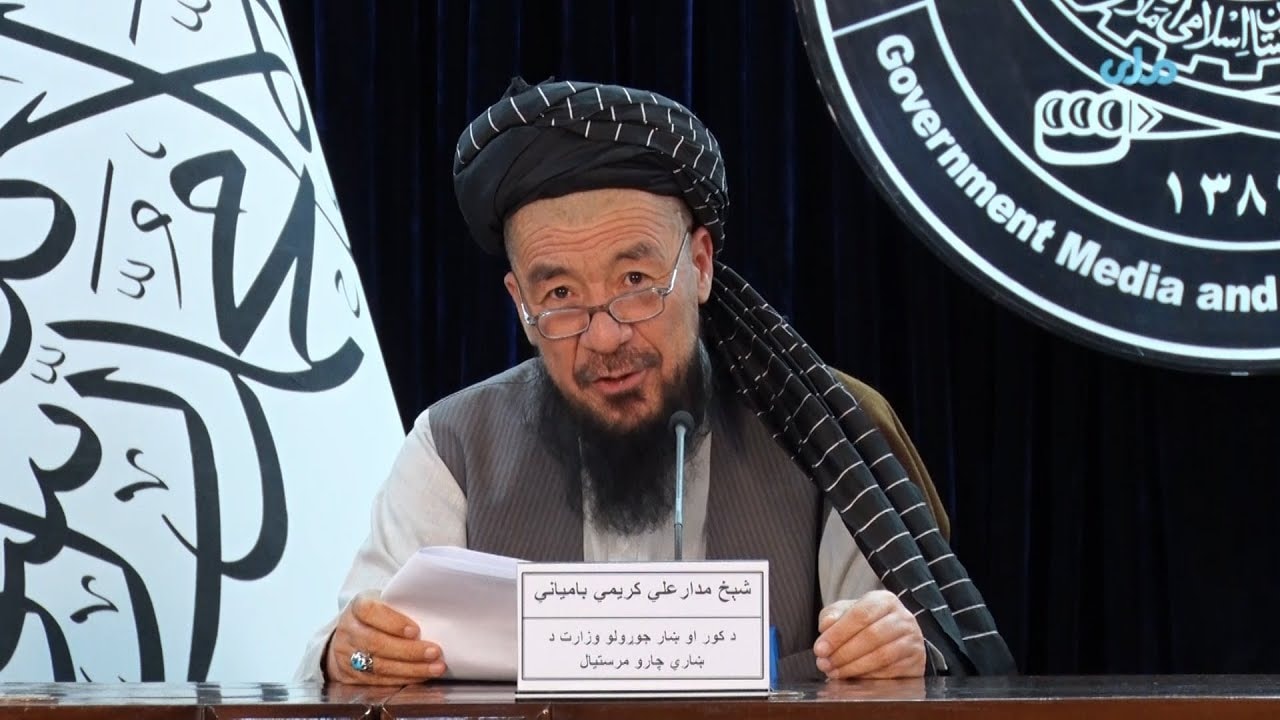
Madar Ali Karimi, Deputy Minister of Urban Development and Housing in the Taliban government, has stated that the directives and recommendations of Mullah Hasan Akhund, the Prime Minister of this administration, are not being implemented in certain cases. He also criticized the treatment of Shia Muslims by Taliban forces, particularly during the days of Muharram, noting that Shia Muslims throughout history have faced significant pressure and hardship but have never been eliminated.
Mr. Karimi made these remarks on the day of Tasu’a, the ninth day of Muharram, during a speech at a mosque in western Kabul. He stated that he had raised the issue of mistreatment of Shia Muslims with Mullah Hasan Akhund. According to him, the Prime Minister had instructed relevant officials to address these concerns; however, these directives have so far produced no tangible results.
In parts of his speech, he said that he had repeatedly expressed his concerns to senior Taliban officials and expressed regret that the orders and statements of the Prime Minister are not being heeded by some authorities.
The Deputy Minister of Urban Development and Housing also criticized Abdul Hakim Sharie, the Taliban’s Minister of Justice, stating that in recent days certain individuals and institutions have taken actions against Shia Muslims that are not consistent with the government’s declared policies. He warned about the potential consequences of such behavior.
Recent reports indicate that several Shiites were arrested for raising Muharram flags. According to informed sources, these individuals were released after three days of detention following orders from the Prime Minister and the Minister of Interior.
Sources also reported that several Shia Muslims elders were briefly detained after being summoned to the Taliban’s Ministry of Justice. They were allegedly instructed to remove Muharram flags from mosques and Hussainiyas as soon as possible.
Karimi further emphasized that the Hazara people and Shia Muslims should not be subjected to pressure. He warned that increasing restrictions and pressure could lead to outcomes that would not be desired by any party.
He described the recent actions of Abdul Hakim Sharie as being beyond the legal mandate of the Ministry of Justice, stating that the ministry should focus on its defined responsibilities and avoid interference in cultural and religious matters.
Abdul Hakim Sharie is considered one of the influential figures within the Taliban cabinet. In previous years, reports had also emerged regarding arrests linked to certain cases and the detention of individuals in facilities under his control.
Madar Ali Karimi is among the few Hazara figures serving within the Taliban administration. His recent remarks regarding the treatment of Hazaras and Shia Muslims are considered one of the rare criticisms made by a government official in recent years.
In conclusion, he urged the Hazara community, particularly the youth, to exercise restraint in response to these events and to avoid emotional reactions. Karimi emphasized that Shia Muslims do not seek violence, conflict, or civil war, and have consistently advocated for solidarity and unity among the people of Afghanistan.
Writer:Salima Aryaei