The Taliban’s ministry of justice, Sunday, August 16, published a new law titled the “Preachers’ Curriculum”, which, according to the published text, has been endorsed by Taliban supreme leader Hibatullah Akhundzada. The law consists of six chapters and covers a range of subjects that Taliban preachers are required to explain and promote to the public through sermons, mosques, and speeches.
The law includes a number of matters related to religious beliefs and principles of worship, instructing preachers to teach these subjects to the public on a regular basis. Another section states that obedience to the “Amir al-Mu’minin” (Leader of the Faithful) is obligatory and describes decisions regarding jihad as a special prerogative of the leader.
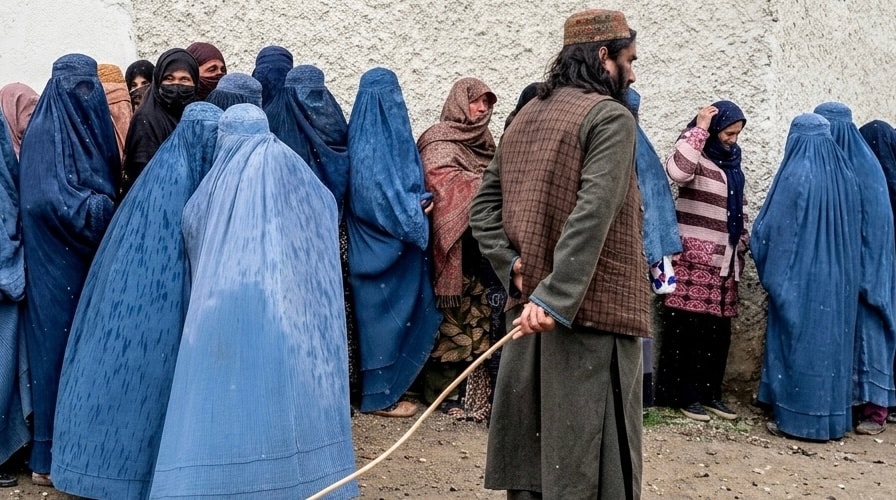
In the section addressing relations between husbands and wives, the “Preachers’ Curriculum” requires women to obey their husbands and describes the man as the “ruler” over the woman. Under the law, women are expected to keep their husbands satisfied and to express gratitude for their husbands’ kindness and services.
At the same time, the law obliges husbands to provide for their wives’ basic needs, including financial support, clothing, and housing, and to pay their wives’ mahr (marital dowry). It also emphasizes that women must not be subjected to oppression or coercion within the family.
Another section permits men to have multiple wives. However, men with more than one wife are instructed to treat them equally and fairly. The document also emphasizes certain rights of women in marriage.
According to the “Preachers’ Curriculum,” the consent of an adult woman is essential at the time of marriage, and no one may force or coerce her into marriage. The law also rejects the practice of “giving” women in settlement of disputes, stating that a woman is not property and that no person may hand her over to someone else in exchange for resolving a dispute or conflict.
Regarding widows, the law states that they cannot be forced to marry their deceased husband’s brother and that the decision rests with the woman herself. It also states that if a widow remarries, she is entitled to receive a mahr from her new husband.
Another section of the law, titled “Covering and Hijab,” addresses women’s dress and veiling. According to the text, preachers are required to explain the distinction between mahram and non-mahram individuals and to advise men to compel women under their guardianship to observe hijab in the presence of non-mahram men.
The “Preachers’ Curriculum” also addresses equality between sons and daughters when parents give gifts to their children, stating that equal treatment is required in such cases. However, the provision does not apply to inheritance. Thus, the law distinguishes between gifts given by parents to their children and their respective shares of inheritance.
Taken together, these provisions indicate that the Taliban’s new law not only establishes an educational and preaching framework for religious preachers but also covers issues including the authority of the Taliban leader, jihad, family relations, marriage, polygamy, women’s rights, and hijab.
Writer:Sali Aryaei