Writer:Salima Aryaei
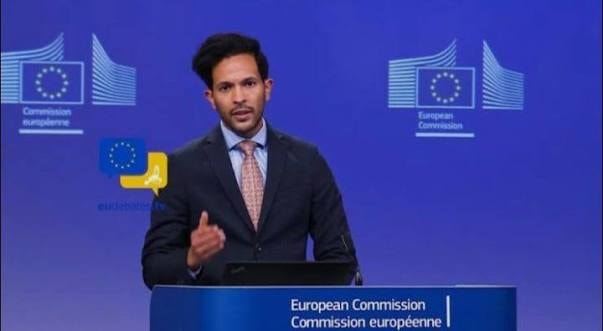
Nabila Massrali, the spokesperson for the EU’s foreign affairs and security policy, emphasized that the European Union’s engagement with the Taliban does not mean recognizing them, and this is absolutely clear.
In a press briefing, she stated that the EU will maintain its presence in Afghanistan, with the aim of facilitating communications, monitoring the situation, assisting member states, and continuing to provide services to the people of Afghanistan. According to her, these interactions are purely operational and in no way represent political recognition of the Taliban.
Massrali continued, “The EU has been mandated by the Council to maintain its operational interactions with the de facto authorities in Afghanistan (the Taliban). This is in no way a recognition. The EU will keep its presence on the ground, facilitate communications, monitor the situation, and continue to provide support for the benefit of the people of Afghanistan.”
Meanwhile, Agence France-Presse reported that despite concerns from human rights organizations and UN-affiliated agencies, the EU is planning a meeting on the expulsion of Afghan refugees, which may include representatives from the Taliban.
According to the report, the focus of the meeting will be on the return of Afghan nationals who do not have residency rights in European countries. The talks will follow earlier visits by European officials to Afghanistan and preliminary assessments.
A diplomatic source told the media: “The goal is to invite the Taliban before the summer.” The source added that the potential Taliban delegation would be more technical in nature.
Additionally, a source familiar with the negotiations said that European officials are reviewing the capacity of Kabul Airport and the status of flights, and are discussing the fate of returned individuals with the Taliban.
However, the European Commission has not yet sent an official invitation to Taliban officials.
These moves by the EU have sparked widespread reactions. Several human rights organizations and women’s rights activists have questioned the process, accusing the EU of ignoring the rights of Afghan citizens, especially women.
In this context, a group of women’s rights activists sent an open letter to senior EU officials, describing the engagement as “betrayal” of Afghan women and calling for its immediate halt.
The letter, addressed to the President of the European Parliament, the President of the European Commission, and members of these bodies, emphasizes that this initiative, called “technical talks,” is in fact a political action and not a neutral administrative process.
The signatories of the letter have warned that such an approach could legitimize a situation in which women’s rights are systematically violated, ultimately leading to the normalization of the current conditions in Afghanistan.