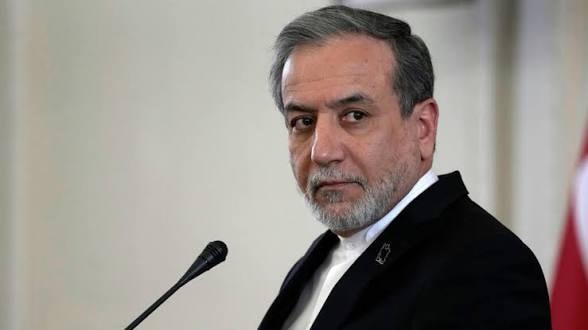
Abbas Araghchi, Iran’s Foreign Minister, has announced that the safe passage of ships and oil tankers through the Strait of Hormuz will be temporarily possible for a period of two weeks.
Following the announcement of a ceasefire between Iran and the United States, he emphasized that this process will be carried out in coordination with Iran’s armed forces and with consideration of existing technical limitations.
According to reports, after 10 days of clashes, Iran and the United States reached a two-week ceasefire early this morning, Wednesday, March 19, with the mediation of Pakistan.
At the same time, U.S. President Donald Trump has stated that the halt of American attacks on Iran will be conditional upon Tehran’s agreement to fully, immediately, and safely reopen the Strait of Hormuz.
Iran’s National Security Council has also confirmed the ceasefire and announced its readiness to continue negotiations, stating that talks to finalize the details of the 10-point peace plan will be held in Islamabad.
With the escalation of tensions between the United States and Israel on one side and Iran on the other, maritime traffic through the Strait of Hormuz has significantly decreased, leading to an increase in oil prices in global markets.
During this period, Iran has allowed only a limited number of ships to pass and has emphasized that vessels belonging to the United States and Israel will not be allowed to pass through this route.
The Strait of Hormuz is considered one of the most important energy transit routes in the world, with about 20% of the world’s oil passing through it. Therefore, any insecurity or disruption in the strait can have significant impacts on the supply and price of oil globally.