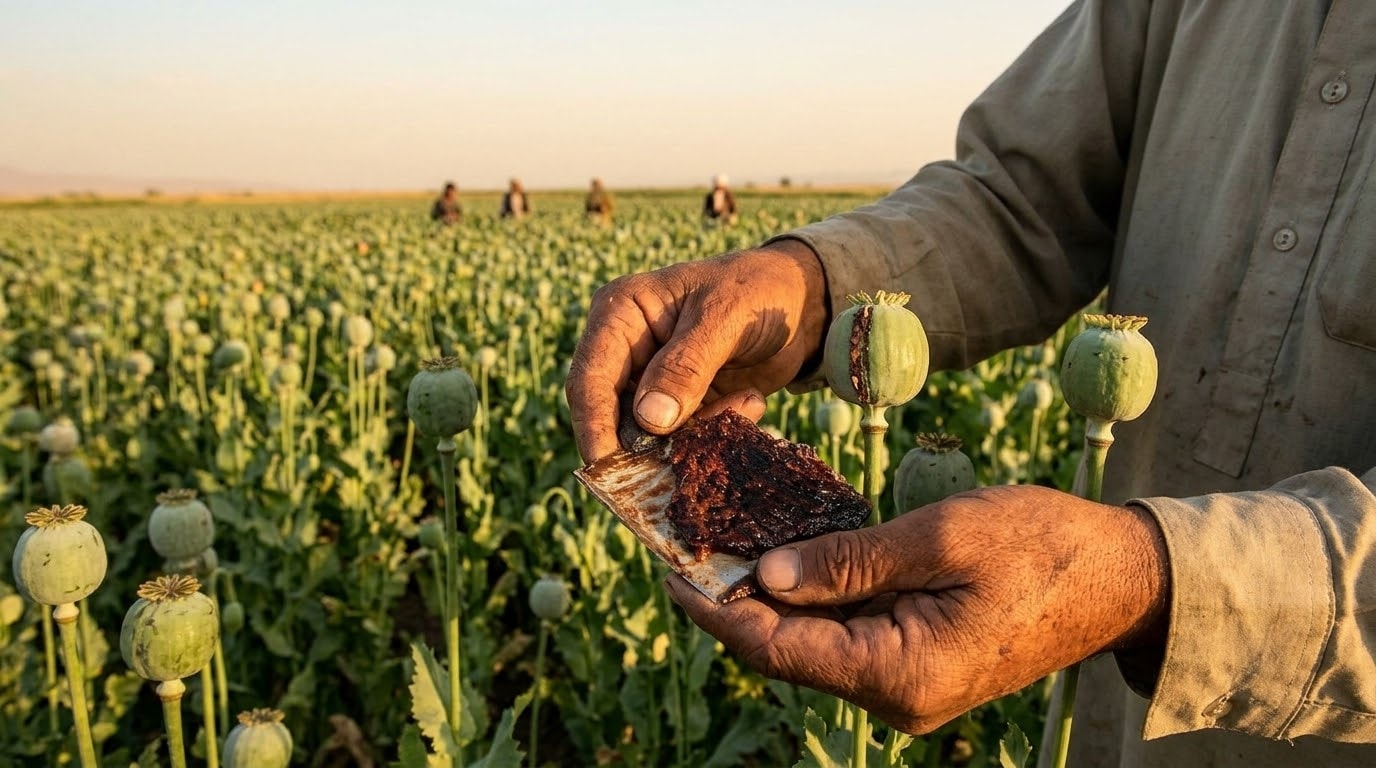
The United Nations Office on Drugs and Crime (UNODC) has reported that despite the Taliban’s ban on poppy cultivation in Afghanistan, revenues from opium sales reached $525 million in 2026.
According to the agency’s latest report, revenue generated from opium production and sales is approaching the average levels recorded between 2018 and 2021.
The report states that although opium production has declined, persistently high market prices have led to a recovery in revenues from its sale. The average price of a kilogram of dry opium stood at approximately $570 in 2025 before falling to $500 in 2026. Nevertheless, this remains several times higher than the pre-ban price of less than $100 per kilogram.
According to the report’s estimates, revenues from opium sales account for 2.7 percent of Afghanistan’s gross domestic product (GDP) and 8.5 percent of its agricultural sector.
The United Nations has stressed that these figures reflect only revenues generated from opium sales and do not include profits from processing, trafficking, exports, or other activities across the supply chain. As a result, the overall value of Afghanistan’s opium economy could be significantly higher.
This comes after the Taliban imposed a ban on poppy cultivation and drug production in 2022, initially leading to a substantial decline in poppy cultivation and opium production. However, figures in the UN’s latest report indicate that despite the reduction in production, high opium prices continue to generate significant revenues from the market.
Writer:Saeed Sameer