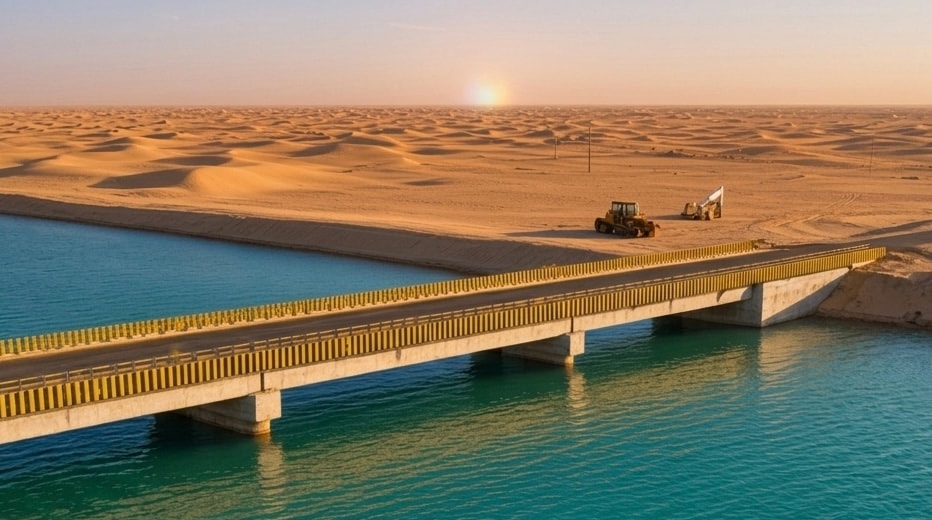
Analysis of satellite imagery shows that only two weeks after the start of water filling in the first phase of the Qosh Tepa Canal, part of its embankment in the Gorjigak area near Mazar-i-Sharif experienced leakage. Following the incident, the escaped water initially flooded approximately 6 square kilometers of surrounding land, and the affected area later expanded to around 38 square kilometers.
According to the latest satellite images, about 24 square kilometers of the area remain submerged. Experts say that, in order to prevent further damage, engineers were forced to deliberately open part of the canal wall in a controlled manner to reduce water pressure and avoid additional losses.
Experts say the leakage is not only a matter of water loss; it could also lead to rising groundwater levels, an increased risk of soil salinity, and a reduction in the amount of water available for transfer to agricultural lands. They describe the incident as one of the first indications of the project’s implementation challenges.
Experts also believe that, as Afghanistan enters a new phase of regional engagement over the waters of the Amu Darya, the emergence of such problems could raise questions about the country’s water resource management practices and the implementation of major water infrastructure projects.
The Taliban have described the Qosh Tepa Canal as one of the key projects aimed at achieving food self-sufficiency and creating employment opportunities, claiming that the canal will have the capacity to irrigate 550,000 hectares of land. However, experts emphasize that the project’s success will depend on effective management, including controlling water leakage, preventing soil salinity, managing sediment buildup, and ensuring efficient use of Amu Darya water.
Overall, the Qosh Tepa Canal is considered one of Afghanistan’s largest infrastructure projects. While it has generated significant hopes for agricultural development, it also faces technical, environmental, and management challenges. Whether the project will transform Afghanistan’s agricultural sector or become associated with long-term difficulties will depend on how the next phases are implemented and how water resources are managed.
Writer:Salima Aryaei