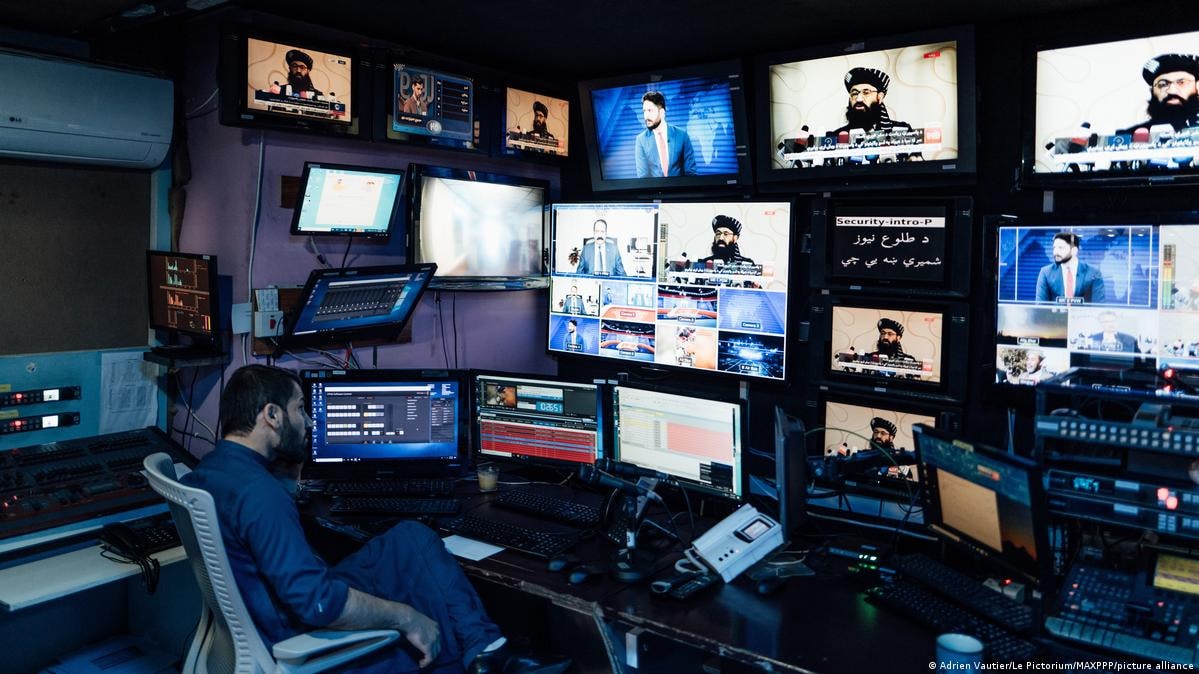
World Television Day is being marked at a time when media operations in Afghanistan, under Taliban rule, are facing widespread restrictions and censorship, while female journalists continue to face numerous prohibitions on their work.
In its annual report, the Afghanistan Journalists Center (AFJC) has reported that at least 21 local television stations have been forced to suspend their operations following the Taliban’s ban on broadcasting images of living beings. According to the report, the ban has been extended to 25 provinces across Afghanistan. During this period, several television networks, including Noor, Barya, Arzo, Tamadon, and Rah-e-Farda, have also faced temporary suspensions of their activities.
Since the Taliban returned to power, media outlets have faced a range of restrictions, including requirements for women to cover their faces and a ban on broadcasting images of living beings. Female employees and programme presenters have also been barred from working in state-run media outlets.
Meanwhile, some women continue to work for private media organisations despite increasingly difficult conditions. A female journalist named Narges said that Taliban restrictions have significantly narrowed the scope of work available to women journalists. She explained that they are unable to interview male experts, contact Taliban officials, or attend press conferences freely.
She added that female journalists face discriminatory treatment by the Taliban and are provided with fewer professional opportunities, resources, and responsibilities compared with their male counterparts.
November 21 is observed as World Television Day. However, the situation of the media in Afghanistan highlights the ongoing challenges facing television broadcasters and journalists, including censorship, bans, and severe restrictions on their professional activities.
Writer:Saeed Sameer