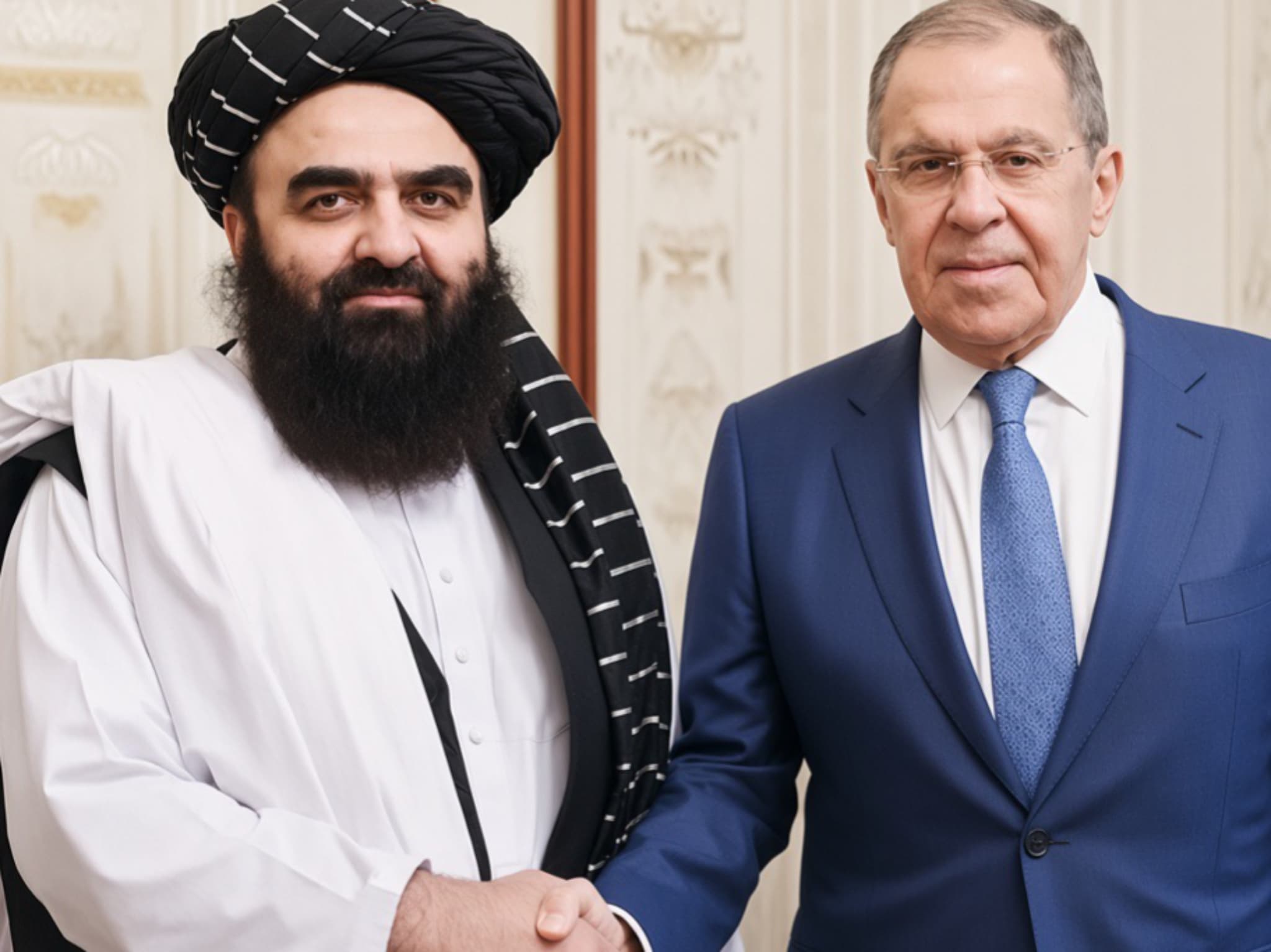
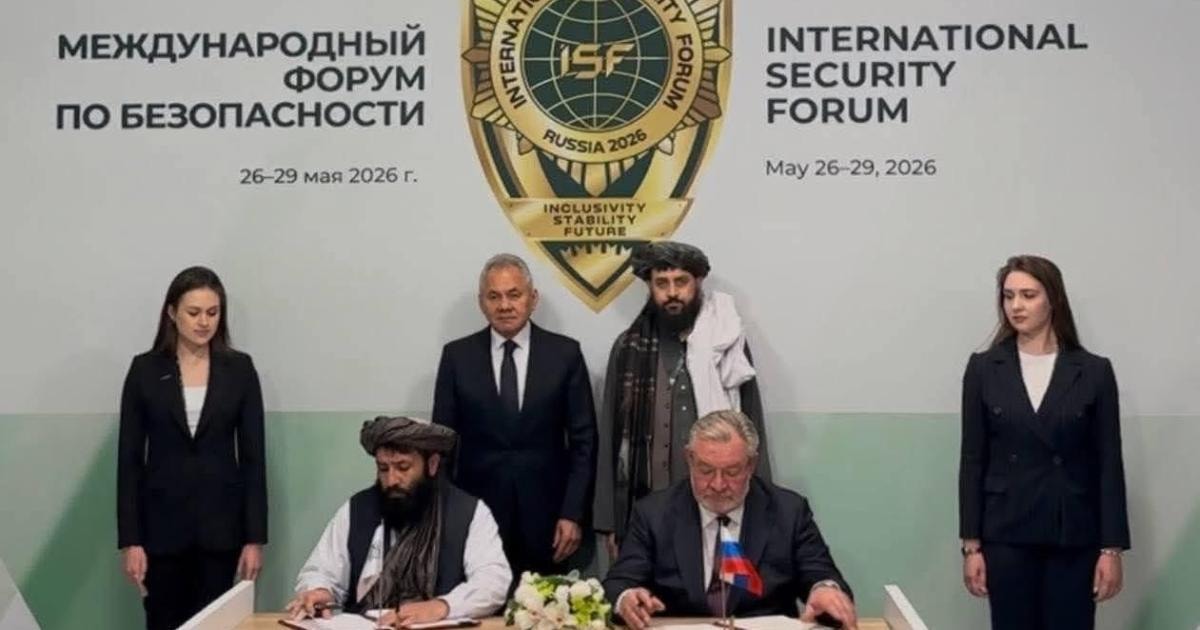
The Taliban and Russia signed a military-technical cooperation agreement on Wednesday, May 27, on the sidelines of the International Security Forum in Moscow. The document was signed in the presence of Mullah Yaqoob, the Taliban’s Minister of Defense, and Sergei Shoigu, Secretary of Russia’s Security Council. However, Russian officials have not yet released details of the agreement.
The agreement comes about a year after Russia formally recognized the Taliban government. To date, Russia is the only country that has officially recognized the Taliban as the government of Afghanistan.
The Taliban delegation’s visit to Moscow, led by Mullah Yaqoob, received wide coverage in international media. Some outlets described the trip as a sign of expanding relations between the Taliban and Russia.
The Taliban had previously sought Russian assistance in military training and the development of defense cooperation. Since returning to power, the group has faced challenges related to military equipment and weaponry, while some existing military assets have also encountered operational difficulties due to extensive use and the need for technical maintenance.
At the same time, Western sanctions and the lack of broad international recognition have prevented the Taliban from establishing formal military cooperation with many countries. As a result, the new agreement is viewed by the Taliban as particularly significant.
Some observers believe the deal could strengthen Mullah Yaqoob’s position within the Taliban leadership structure. As the son of Mullah Omar, the founder of the Taliban, he holds considerable influence among the group’s senior officials.
Reports indicate that the Taliban, particularly in the areas of air force capabilities, aviation equipment, and defense systems, require foreign assistance. However, experts believe that fully rebuilding Afghanistan’s air force would require substantial financial resources, and it remains unclear to what extent Russia is willing to participate in such a project.
Currently, a number of Russian-made helicopters that have been used in Afghanistan over different periods remain operational, but many require technical inspections, repairs, and spare parts.
Some analysts suggest that Russia’s cooperation with the Taliban may initially focus on areas such as supplying spare parts, training technical personnel, and carrying out maintenance work—measures that are far less costly than a large-scale reconstruction of the Afghan air force.
Meanwhile, the Taliban’s use of drones has also drawn attention. During recent tensions with Pakistan, the group referred to the use of drones, although the source of these systems has not been officially disclosed.
At the Moscow Security Forum, Mullah Yaqoob emphasized the need to establish a specialized defense system, stating that Afghanistan requires a structure capable of ensuring domestic security while also contributing to regional stability. He also spoke about efforts to counter groups that threaten Afghanistan’s security.
The Taliban commonly refers to ISIS-Khorasan as “Khawarij” or “seditionists” and has repeatedly stressed the importance of combating the group. Observers believe that highlighting the fight against ISIS may be part of the Taliban’s effort to gain greater support from Russia.
Earlier, Sergei Shoigu stated that thousands of members of armed groups are active in Afghanistan and warned that the situation could pose a threat to regional security, particularly for Central Asian countries.
Experts believe that Russia’s concerns about the expansion of extremist groups in Afghanistan and the potential spread of instability to neighboring countries have been among the main drivers of Moscow’s growing engagement with the Taliban—a process that has now resulted in the signing of a military-technical cooperation agreement between the two sides.
Despite the signing of the agreement, it remains unclear which areas of cooperation will be prioritized in practice and how extensive the partnership will become. More details about the cooperation are expected to emerge in the coming months.
Writer:Salima Aryaei