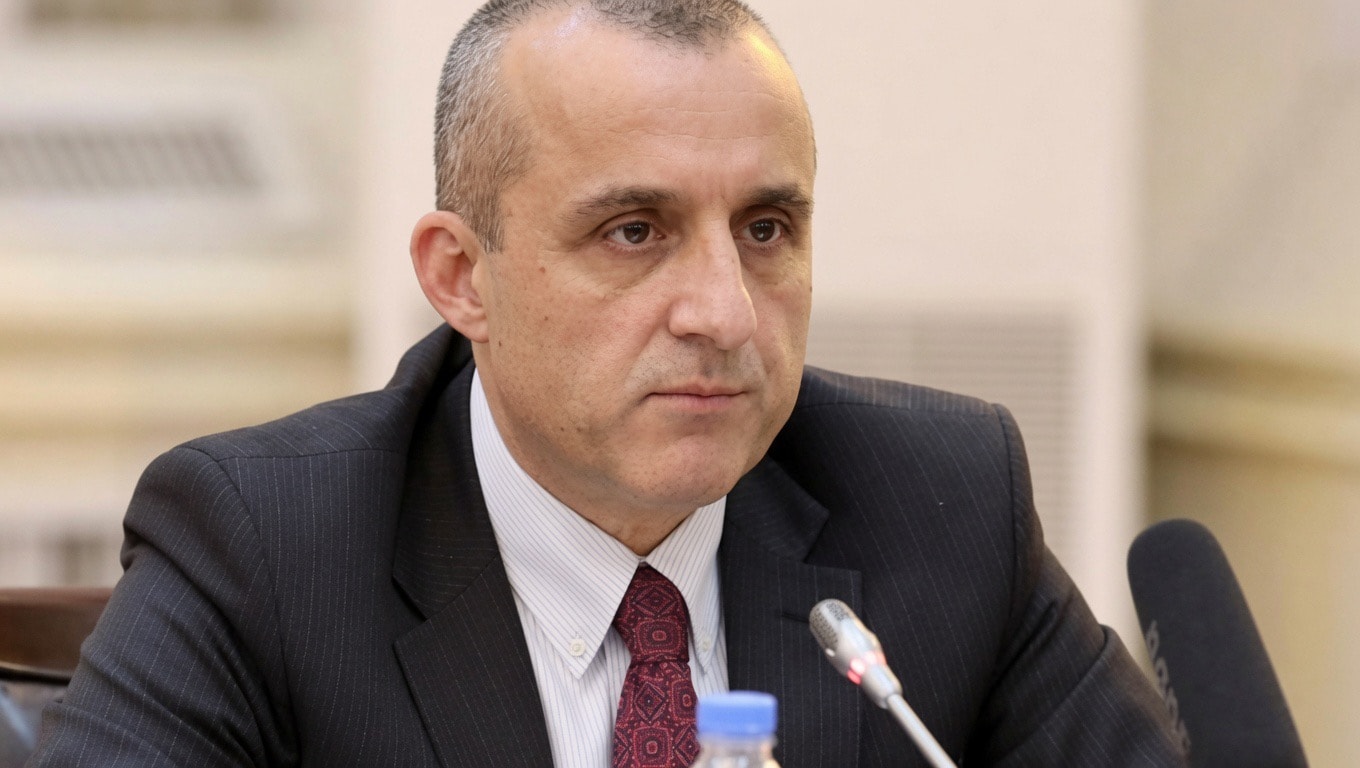
Amrullah Saleh, the former Vice President of Afghanistan, has responded to recent remarks by the Pakistani military regarding an attack in the Ziarat district of Balochistan, saying that Islamabad has, after three decades, now described the Taliban as “illegitimate.”
In a post on the social media platform X on Wednesday, Saleh wrote that Pakistan had, for the first time, reached the conclusion that the Taliban is an illegitimate group. His remarks came after a press briefing by the spokesperson of the Pakistani military.
Referring to the statements made by the military spokesperson, Saleh said that the recent attacks in Pakistan appeared to have involved “command, coordination, logistical support, and organized propaganda.” He added that it seemed the Taliban had become more capable and more organized than Pakistani officials had anticipated.
The former Afghan vice president further wrote that when a proxy force evolves into a rebellious and illegitimate group for its own sponsor, it creates difficult consequences for that country.
He also claimed that the Taliban governor of Kandahar had repeatedly travelled to Quetta, Pakistan, in a personal armored vehicle to visit his family, and questioned whether, according to Pakistani authorities, he too would now be considered part of the same “illegitimate group.”
Saleh called on Pakistan’s military public relations department to provide further clarification on its position, adding that the institution owed the people of Afghanistan “a historical lesson” regarding the origins of the Taliban’s formation and Pakistan’s relationship with the group.
In conclusion, he described Nasirullah Babar, a former Pakistani interior minister, as the “founding father of an illegitimate proxy force.”
Nasirullah Babar, a retired Pakistani army general, served as Pakistan’s interior minister from 1993 to 1996 during Benazir Bhutto’s second government. Some opponents of the Taliban regard him as one of the influential figures in the group’s early formation and the support it received during its initial years.
Writer:Salima Aryaei