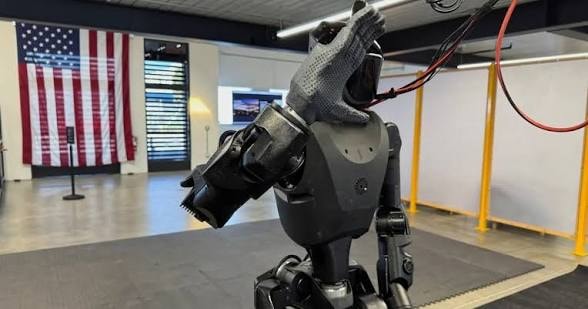
A San Francisco–based robotics company with ties to the Trump family is developing humanoid robots for military and industrial applications. The company has announced that some of its prototype robots have already been tested in Ukraine and are expected to be used in future U.S. military pilot programs.
According to a CNBC report, Foundation Future Industries was established in 2024 with the goal of building robots capable of performing various tasks in hazardous environments, including battlefields and heavy industries.
Sankit Pathak, the company’s CEO, said that humanoid robotics technology is approaching a stage where it can replace human workers in certain dangerous missions, reducing risks to human life.
The company has sent two Phantom MK-1 robots to Ukraine for testing. These trials were conducted with support from the U.S. government and in cooperation with Ukrainian officials, focusing primarily on transporting equipment in high-risk areas.
According to company representatives, the robots are capable of carrying equipment and other loads a task that often involves significant danger for military personnel during wartime. However, the current version of the robot still faces several limitations. Its carrying capacity is approximately 20 kilograms, it is not water-resistant, and its battery life is considered insufficient for extended missions.
Foundation Future Industries has announced plans to send a more advanced version, called Phantom 2, to Ukraine later this year. According to the CEO, this model will have enhanced capabilities and nearly double the carrying capacity of its predecessor.
The company has so far secured $24 million in government research contracts. These contracts focus on evaluating the use of robots for tasks such as inspections, equipment transport, and operation of weapons systems within the U.S. Army, Navy, and Air Force.
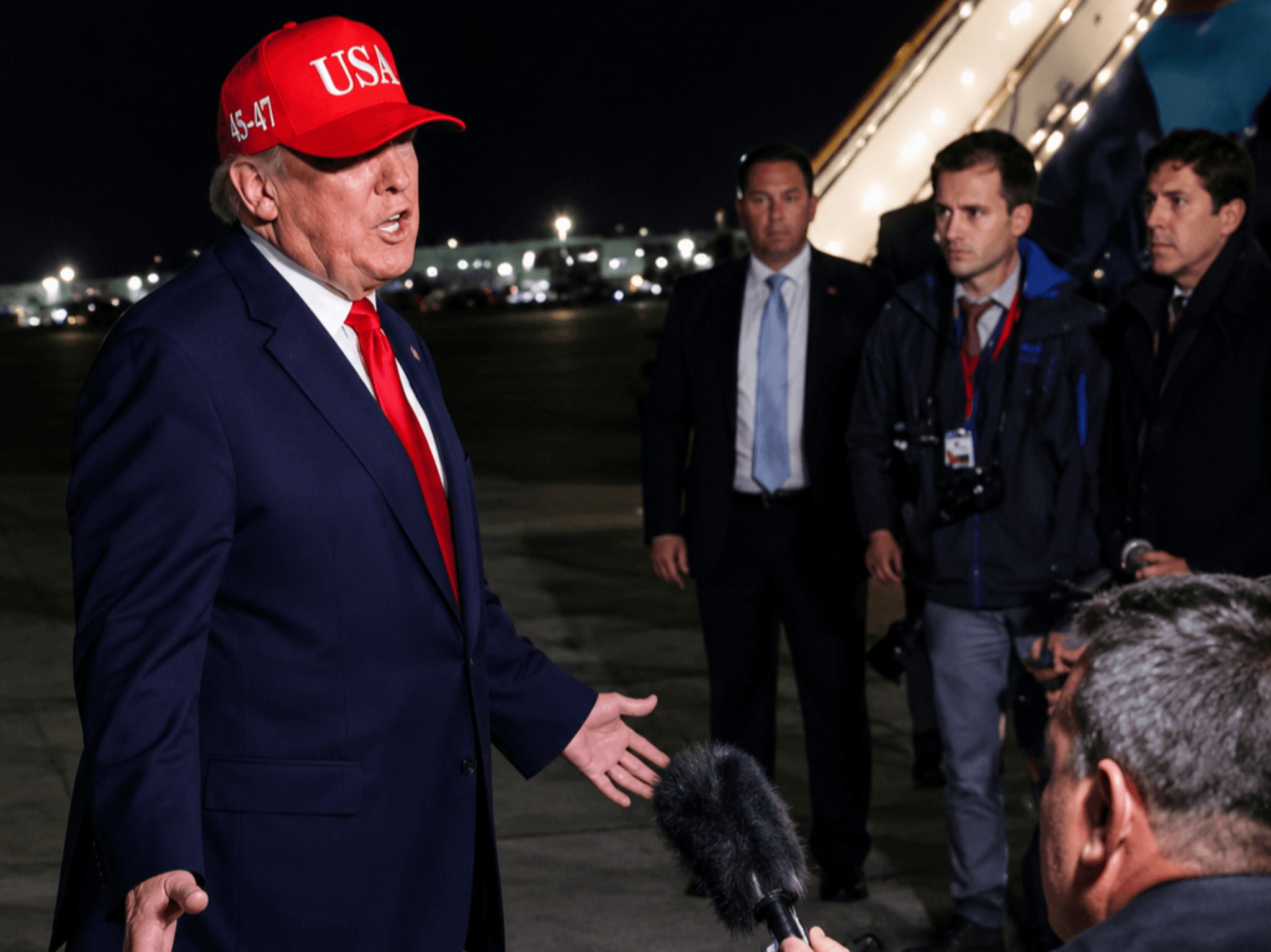
Eric Trump, son of Donald Trump, recently joined the company as a Senior Strategic Advisor. His appointment has drawn criticism from Elizabeth Warren, who described the government contracts awarded to the company as “blatant corruption.”
In response, a company spokesperson stated that Eric Trump had already been working with the organization as an advisor and investor before his official appointment.
CNBC reported that the company is attempting to position its technology as part of the strategic competition between the United States and China. The CEO stated that the goal is to develop robots that outperform comparable Chinese systems and meet the needs of the U.S. military.
Experts believe humanoid robots could offer advantages in urban warfare because many operational environments including staircases, hallways, basements, and confined spaces are designed for human movement. However, some specialists remain skeptical due to the high costs, technical complexity, and challenges associated with large-scale production of such robots.
Melanie Sisson noted that building human-like robots is a complex and expensive undertaking, and that the experience of the war in Ukraine has shown that cheaper, faster, and more adaptable systems are often more effective in many situations.
The report also highlights ethical concerns surrounding the deployment of humanoid robots on the battlefield. One of the most significant issues involves autonomous decision-making in situations where human lives are at risk.
Addressing these concerns, the company’s CEO stated that in most military applications, final decisions will remain under human control. However, in certain emergency situations, robots may be granted the ability to make fully autonomous decisions in order to respond more quickly.
Writer:Salima Aryaei