Pakistan has launched two new overland trade corridors through Iran and China. The move comes as Islamabad has indefinitely closed its main transit crossings with Afghanistan following growing security concerns.
The two corridors became operational in 2026 and pass through the Gabd–Rimdan border crossing in Iran and the Khunjerab dry port in China. Pakistan established these routes after closing key border crossings with Afghanistan, including Torkham and Chaman, in October 2025 following cross-border militant attacks.
According to reports, more than 14,000 tonnes of goods have so far been transported through these two corridors. One of the routes was also formally inaugurated in a ceremony held in Karachi, attended by senior officials from Uzbekistan, Kyrgyzstan, and Tajikistan.
Islamabad has presented these corridors as permanent alternative routes for Central Asian countries, enabling them to access global markets and Pakistani seaports without relying on transit through Afghanistan.
Under this arrangement, commercial convoys carrying frozen meat and other export goods have been dispatched via Iran to destinations including Tashkent and Bishkek. Uzbekistan has also used the Gabd–Rimdan route to transport agricultural machinery and industrial raw materials.
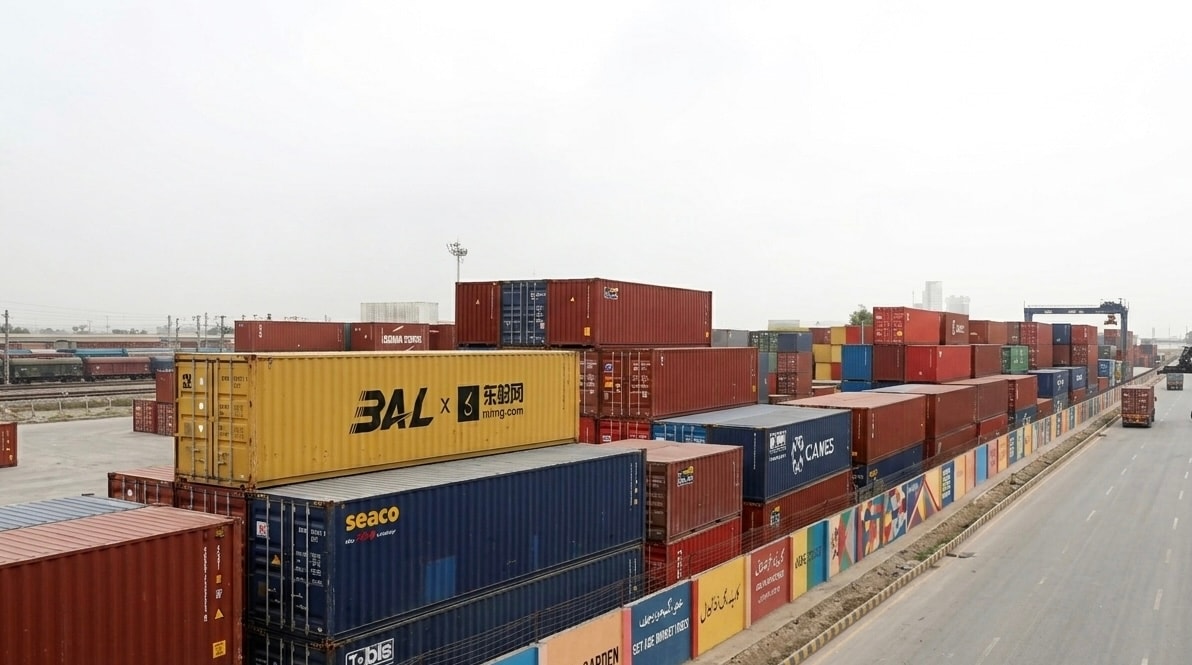
Pakistan has further sent its first export shipment from the Karachi Export Processing Zone to Kyrgyzstan via the Khunjerab dry port under the framework of the international transit system. In return, Kyrgyz containers carrying mineral resources and textile products have travelled through the 3,300-kilometre Bishkek–Karachi corridor to Pakistan.
The launch of this trade network has not only expanded regional transit connectivity but has also increased the use of Pakistan’s integrated electronic customs system, which is designed to digitally process documentation and facilitate border procedures.
At the same time, Pakistan is pursuing the development of the Gwadar Port under the second phase of the China–Pakistan Economic Corridor (CPEC). Located approximately 400 kilometres east of the Strait of Hormuz, the port is expected to handle and manage a significant share of goods transported through the newly established corridors.
These developments highlight Pakistan’s efforts to diversify regional trade routes and reduce dependence on transit links with Afghanistan. The initiative could strengthen Pakistan’s role in the region’s emerging transportation and trade networks.
Meanwhile, the Taliban has also sought alternative routes to access Pakistani ports in recent years. At the same time, Afghanistan’s trade relations with Central Asian countries have expanded. According to published figures, Afghanistan’s trade volume with Uzbekistan has exceeded $1.7 billion, while trade with Kazakhstan has surpassed $1 billion. In addition, the Taliban has expanded Afghanistan’s commercial relations with Iran, India, and China alongside its growing engagement with Central Asian states.
Writer:Salima Aryaei