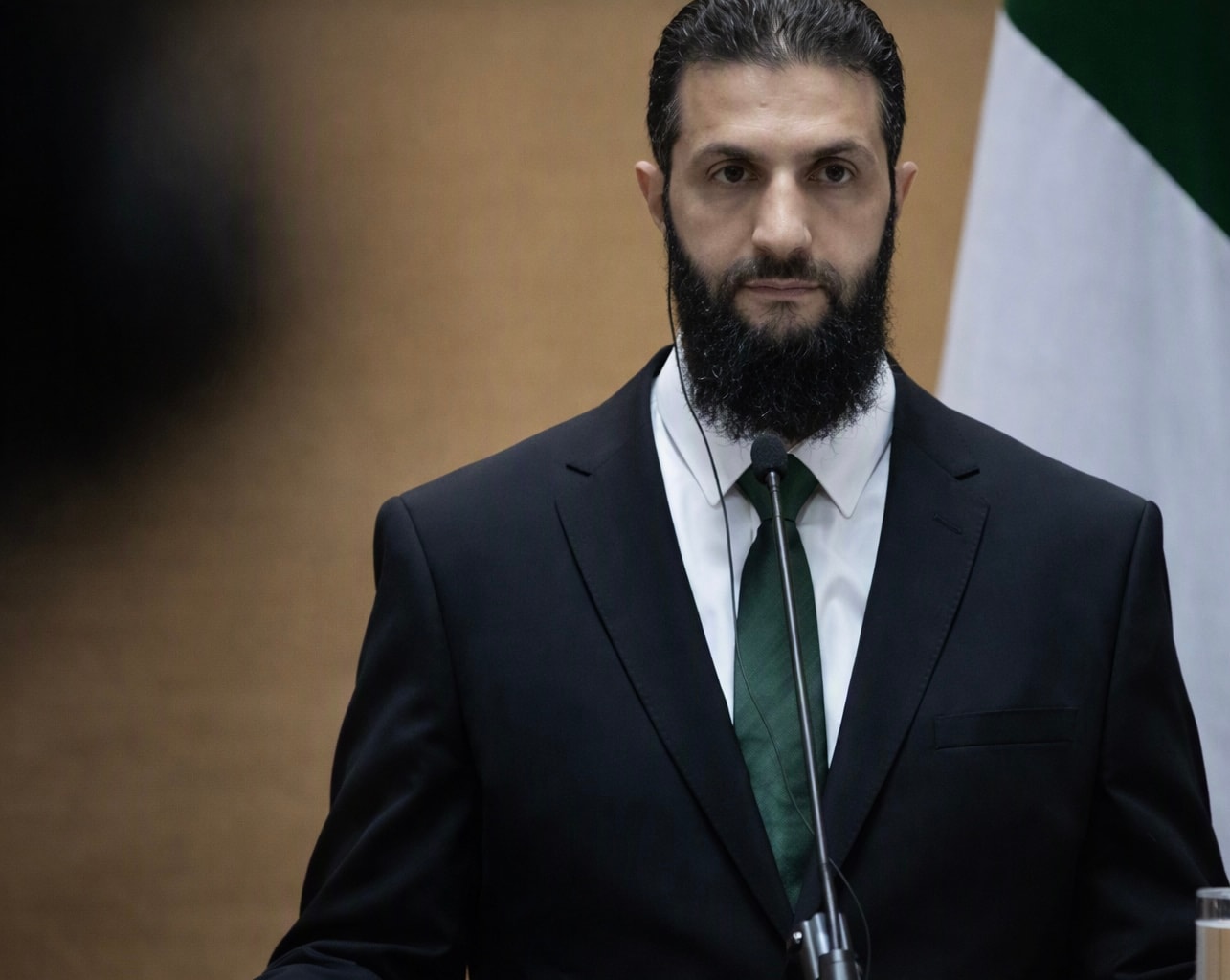
Syrian President Ahmed al-Sharaa has said that Damascus is working to reach a security agreement with Israel, adding that such an agreement could pave the way for a comprehensive peace between the two countries without Syria giving up its claim to the Golan Heights.
In an interview with Al Jazeera on Sunday, July 26, al-Sharaa said the Syrian government is consulting with several countries in an effort to encourage Israel to adopt a “more balanced” approach toward Syria. He also emphasized that Damascus is seeking to avoid any military confrontation.
The remarks come as Israel has expanded its military presence in parts of Syrian territory since the fall of Bashar al-Assad’s government in December 2024 and the establishment of a new administration led by Ahmed al-Sharaa.
Israeli forces entered the UN-monitored buffer zone inside Syria following Assad’s ouster, including areas of the Syrian side of Mount Hermon. Israel has also carried out several strikes on targets in Syria in recent months, saying it has acted in support of the Druze minority in the country’s southwest.
Syria’s state news agency, SANA, reported on Sunday that Israeli shelling in the village of Maariya destroyed an electricity transformer, cutting power to homes in the area.
The Syrian president’s comments coincided with United Nations Secretary-General António Guterres’s visit to Damascus. It was the first visit by a UN secretary-general to Syria since 2009.
In a message posted on the social media platform X, Guterres stressed the importance of respecting Syria’s sovereignty, independence, unity, and territorial integrity. He said Israel’s violations of the 1974 Disengagement Agreement were “unacceptable” and must end.
The 1974 Disengagement Agreement was signed between Syria and Israel under UN mediation following the Arab-Israeli War. The agreement established a buffer zone between the two sides, which is monitored by United Nations peacekeeping forces.
Ahmed al-Sharaa, who has sought to normalize Syria’s foreign relations, became the first Syrian president since 1967 to address the United Nations General Assembly in New York last year. His government is working to rebuild Syria’s foreign relations and economy after nearly 14 years of civil war and decades of international isolation.
The Syrian president also said his government has no plans for military intervention in Lebanon. This comes despite the fact that he and Lebanon’s Hezbollah movement were on opposing sides during the Syrian civil war.
Writer:Salima Aryaei