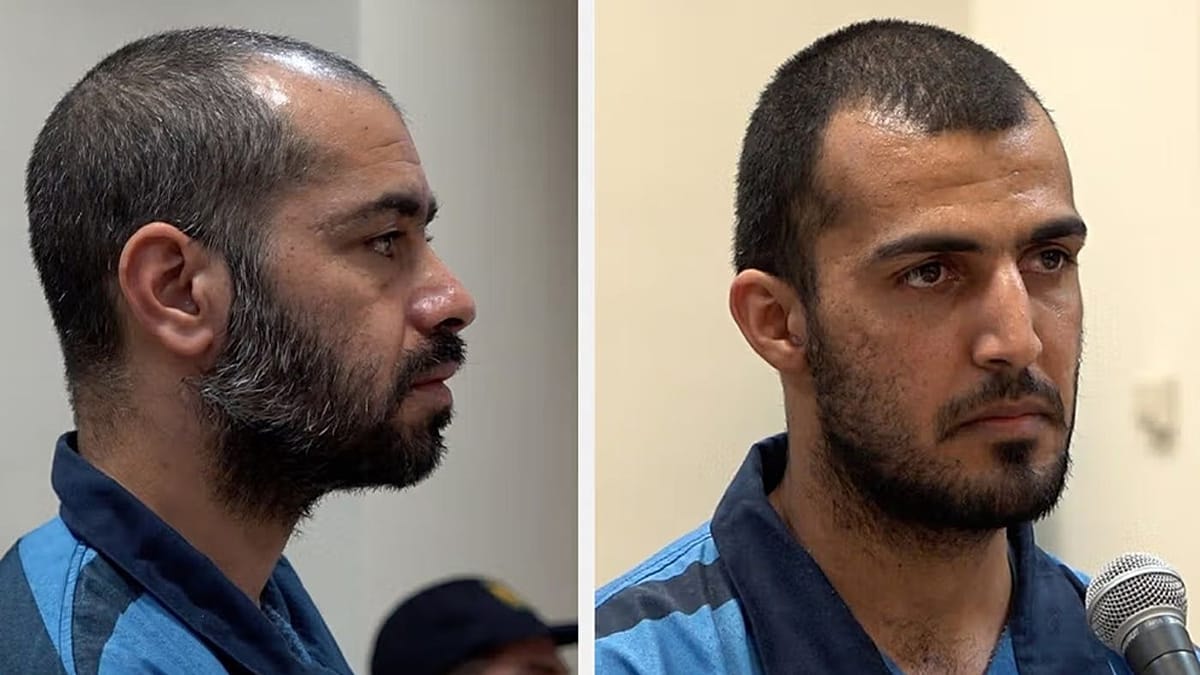
According to Mizan News Agency, which is affiliated with the Judiciary of the Islamic Republic of Iran, the death sentences of two defendants convicted in the case involving the burning of a mosque in Tehran have been carried out after being upheld by the Supreme Court.
According to the published report, the two individuals had been sentenced to death on charges including setting fire to a mosque, destruction of public property, clashes with security forces, and blocking streets.
Mizan News Agency, referring to alleged confessions attributed to Ashkan Maleki, one of the defendants in the case, claimed that he and Mehrdad Mohammadinia were involved in setting the mosque on fire. The report also stated that CCTV footage had recorded the actions attributed to the defendants.
However, Mizan News Agency did not disclose the exact time or location of the executions and provided no details regarding the judicial process, the defendants’ access to legal counsel of their choice, or the possibility of independently reviewing the evidence and documentation. These claims have not yet been independently verified.
In recent months, the Islamic Republic has continued carrying out death sentences related to protest-related cases. Mizan News Agency occasionally reports on the implementation of such sentences, but no comprehensive official statistics on the total number of protest-related executions have been published.
According to estimates released by some human rights organizations and sources—largely based on official reports—at least 10 to 13 protesters had been executed by early Jawza 1405 (late May 2026). Other reports have suggested that the number of executions exceeded this figure by the end of spring 1405.
These sentences have generally been issued on charges such as “enmity against God” (moharebeh), “killing a security officer,” or “terrorist activities.”
Meanwhile, a number of human rights organizations have expressed concern about the continued implementation of death sentences and the handling of these cases. These organizations argue that, in some instances, judicial proceedings have advanced at an unusually rapid pace and that independent lawyers have faced limited access to case files.
According to these groups, compliance with fair trial standards including effective access to legal counsel, transparency in judicial proceedings, and meaningful opportunities to appeal verdicts has been the subject of questions and criticism.
The families of some defendants have also criticized what they describe as inadequate communication regarding court hearing schedules and the manner in which verdicts were delivered.
Human rights activists have warned that the continuation of this trend could have significant consequences for the broader public sphere. In addition, some sources have alleged that certain confessions were obtained without the presence of legal counsel and under pressure claims on which Iranian authorities have not provided an explanation.
Legal observers likewise contend that the speed of proceedings and restrictions on access to defense resources have raised questions about due process and judicial independence.
Writer:Salima Aryaei