Water Shortage in 12 Villages of Baharak, Takhar: Families Travel Up to 10 Kilometers to Access Water.
The lack of safe drinking water in 12 villages of the Qawqiya area in Baharak district, Takhar province, has created severe hardships for more than 2,000 families. Residents say they are sometimes forced to travel up to 10 kilometers each day to obtain the water they need.
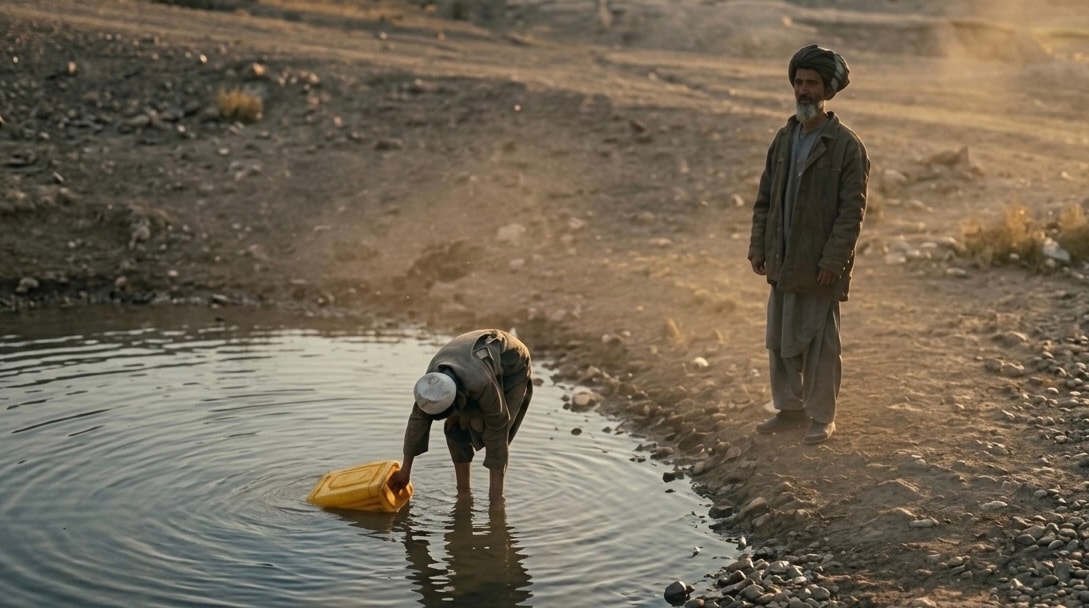
Several residents report that, due to the absence of adequate sources of clean water, they are occasionally compelled to use contaminated ponds and other unsafe water sources, increasing the risk of waterborne diseases and other health problems.
Abdul Razzaq, a resident of Baharak district, told Afghanistan’s National Television, which is under Taliban control, that the use of unsafe water has led to a rise in illnesses among both local residents and their livestock.
He added that the prolonged crisis has become a serious concern for the community, with residents calling for urgent action to address the water shortage.
Mohammad Hassan, another resident of the area, said the lack of water has affected not only public health but also the livestock sector.
According to him, many animals owned by local families have died as a result of water shortages, and if the situation continues, some households will be forced to sell their remaining livestock.
Abdul Rahman Abid, the Taliban’s deputy district governor in Baharak, said that only one deep well has been drilled in the area so far. He added that expanding water supply services across the region would require substantial funding.
The Qawqiya area is located approximately 12 kilometers from the center of Baharak district in Takhar province and is home to more than 2,000 families.
The ongoing challenges come as the United Nations Assistance Mission in Afghanistan (UNAMA), marking World Environment Day in mid-June, stated that more than half of Afghanistan’s population is facing the severe impacts of drought and water scarcity.
UNAMA said that drought and water shortages remain among the most widespread threats confronting people across Afghanistan.
Writer:Salima Aryaei