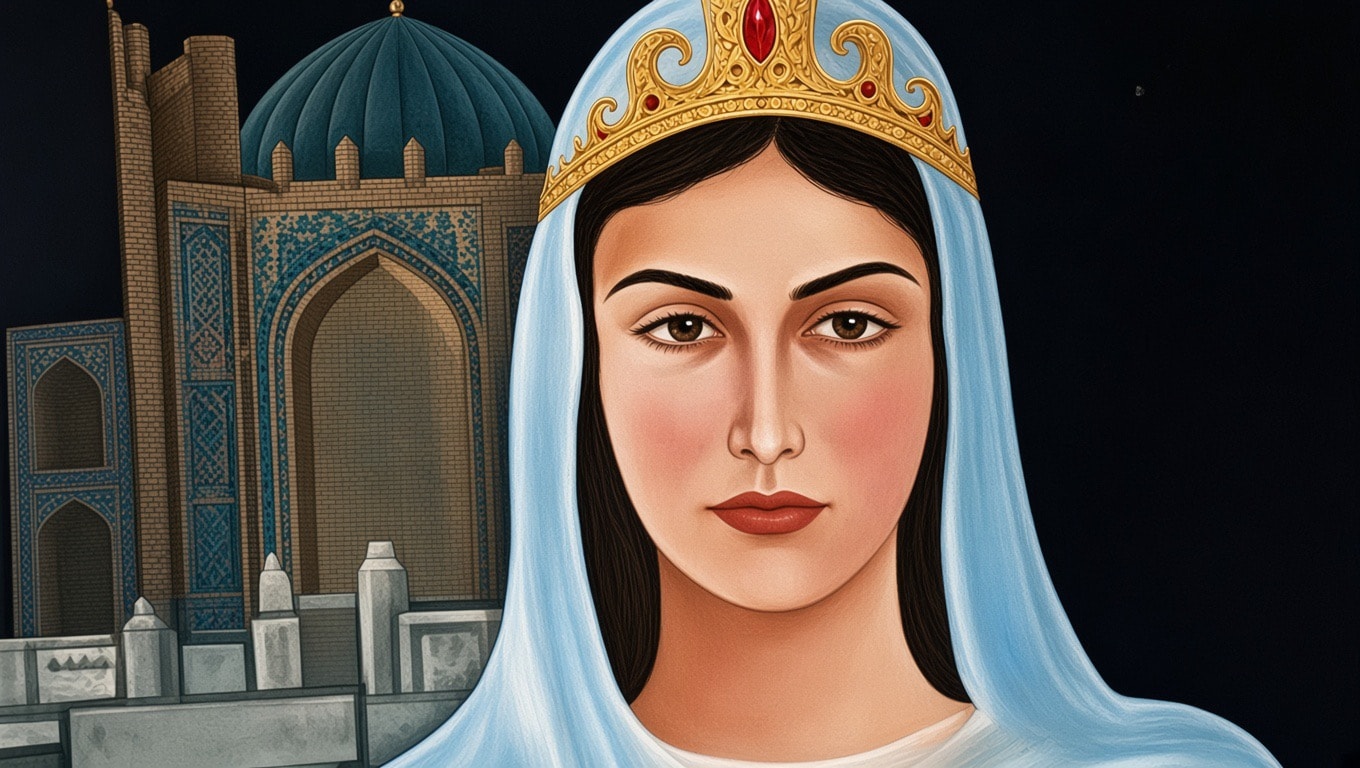
Rabia Balkhi’s poetry published in a collection translated into 10 languages.
The surviving works of Rabia Balkhi, one of the earliest known female poets writing in Persian, have been translated and published in a collection titled The Vanished Work in 10 languages.
According to a report published by the website of Tajikistan’s Satym Ulughzoda International University of Foreign Languages, a selection of works and poems attributed to Rabia Balkhi has been translated into Persian, Russian, English, Chinese, Korean, Japanese, French, German, Arabic, and Uzbek.
The initiative aims to introduce Rabia Balkhi’s literary legacy to an international audience and promote greater awareness of classical Persian literature.
Rabia Balkhi, also known as Rabia bint Ka’b al-Qazdari, was a prominent Persian poet of the fourth century AH and is regarded as one of the earliest known female poets in Persian literature. Literary sources consider her a contemporary of Rudaki, while portions of her romantic poetry have been preserved in the works of biographers and later poets.
However, it should be noted that no complete divan of Rabia Balkhi’s poetry has survived. What remains of her work today consists of scattered verses and fragments. Among the best-known poems attributed to her is a ghazal that begins with the line, “I have once again bound love in chains.”
Translating Rabia Balkhi’s surviving works into various languages could help highlight the role of women in the history of Persian literature and introduce audiences in different countries to the heritage of classical Persian poetry.
Translations into English, Russian, Chinese, Japanese, French, German, Arabic, and other languages could also provide opportunities for comparative research into women’s poetry and classical Persian literature.
Rabia Balkhi holds a distinctive place in the history of Persian literature, as she is among the earliest women whose Persian poetry was recorded in literary sources. Existing literary scholarship has also identified a number of her poems through sources such as Attar’s Ilahi-Nama and early biographical anthologies.
The publication of this collection in 10 languages, if the details of the book and its translated editions are verified, could represent a significant step toward introducing Rabia Balkhi’s literary legacy beyond the Persian-speaking world.
Rabia’s life and her legendary love for Bektash have been widely reflected in Persian literature. Centuries after her death, she continues to be regarded as an important symbol of women’s presence in the history of Persian poetry.
The publication of multilingual translations of her surviving works could once again bring the name of this poet from Balkh to the attention of literary and academic circles around the world.
Writer:Salima Aryaei