Nearly three months have passed since the killing of Ayatollah Ali Khamenei, the former leader of the Islamic Republic, a figure who, after Ayatollah Ruhollah Khomeini, stood at the top of Iran’s political power structure for more than 36 years and played a decisive role in many of the country’s major decisions.
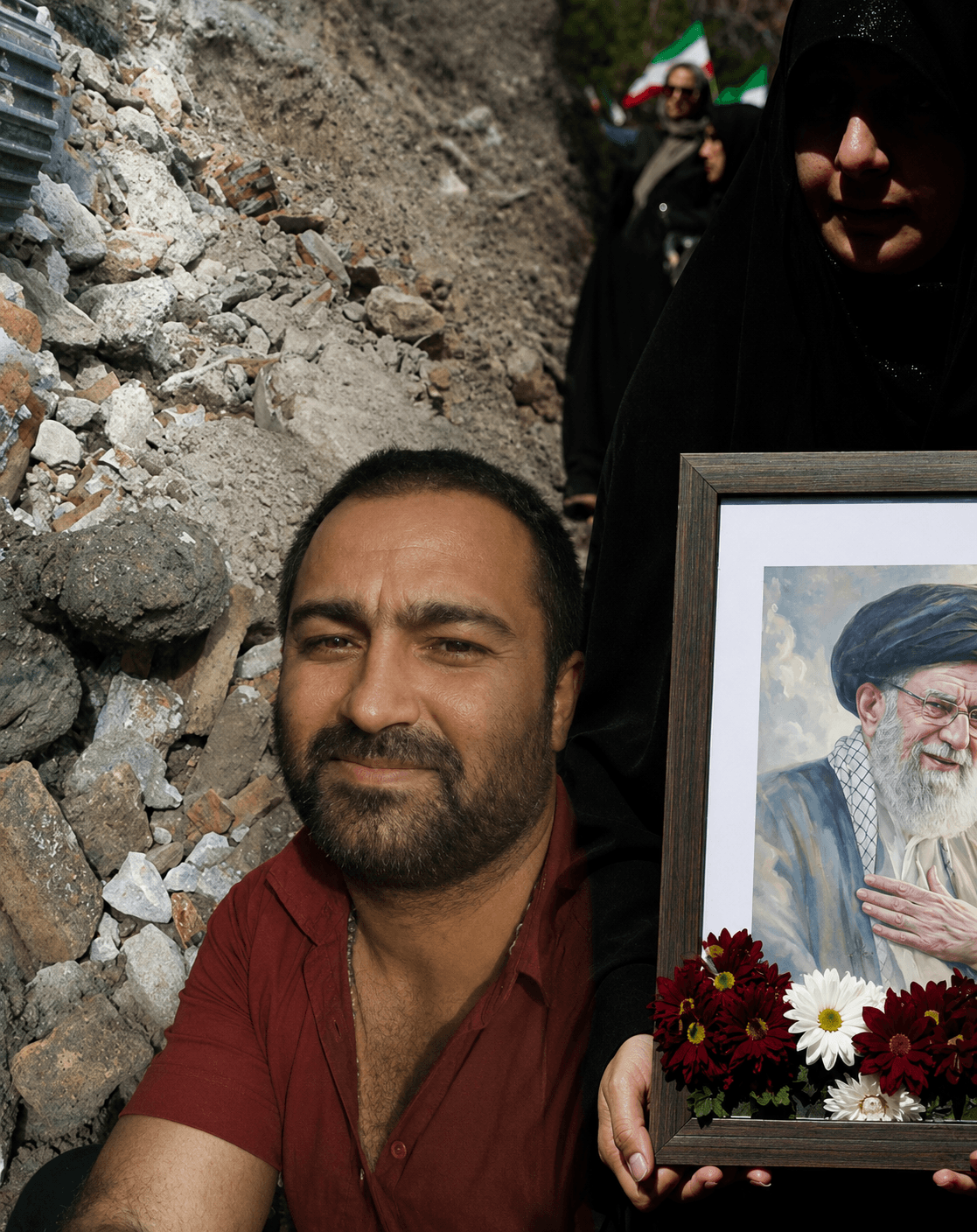
According to statements by Israeli and American security agencies, as well as confirmation from Iranian officials, Khamenei was killed in the early hours of Saturday, February 28, 2026, during airstrikes targeting the complex known as the “Leader’s House” (Beit-e Rahbari). Despite official mourning ceremonies and the fortieth-day memorial being held, no transparent information has yet been released regarding his burial place or funeral arrangements.
This issue has fueled speculation about the possibility that the former leader of the Islamic Republic was buried secretly, a matter some compare with similar historical events in Iran.
In one historical account, Kambiz Atabay, a person close to the Pahlavi family, stated that Reza Shah, contrary to public belief, was not buried in Egypt and that his body had been secretly kept in the Shah Abdol-Azim area. According to him, the burial site was concealed on the advice of people close to the Pahlavi family in order to prevent possible future desecration.
Years later, in May 2018, this account once again attracted public attention when a mummy was discovered during construction operations in the city of Rey. Many believed it belonged to Reza Shah. However, officials of the Islamic Republic never officially confirmed its identity.
In Iranian history, the relocation or destruction of the tombs of political figures has a long precedent. It is said that Agha Mohammad Khan Qajar transferred the remains of Karim Khan Zand from Shiraz to Tehran. It is also reported that the bones of Nader Shah Afshar were moved several times during different historical periods.
In the years following the 1979 Revolution, some tombs of Qajar kings were also destroyed or repurposed. The tomb of Naser al-Din Shah in Shah Abdol-Azim was damaged, and reports were published about the destruction of parts of it. There have also been reports concerning the repurposing of Fath-Ali Shah’s mausoleum in Qom.
Under the current circumstances, the absence of official information about Khamenei’s burial place continues to deepen the uncertainty. Some analysts believe that security concerns and fears of public reactions are the main reasons why no public funeral ceremony has been held.
At the same time, rumors and unofficial narratives continue to spread. Some individuals in public spaces and on social media have even claimed that Khamenei is still alive, assertions for which no evidence or official confirmation has so far been provided.
The uncertainty surrounding the fate of the former leader’s body has now become one of the most controversial political and historical topics in Iran, with many questions about it still remaining unanswered.
Writer:Salima Aryaei