In recent years, the attention of industrialists in Afghanistan to the process of waste recycling has increased, to the extent that in some industrial towns, part of the production comes from recycled materials. Currently, dozens of factories operate in the waste recycling sector, including plastic, metal, and rubber waste, and in conditions of economic crisis and widespread unemployment, they strive to reintroduce these discarded materials into the production cycle.
In the past, a large portion of plastic waste and worn-out tires would accumulate on the outskirts of cities or along roads, or be used as fuel in homes, baths, and kilns. The smoke from burning these materials was a major cause of air pollution, especially during winter a pollution that residents of Kabul and other cities frequently complained about. However, now a portion of this waste, instead of being burned, is being transported to recycling factories.
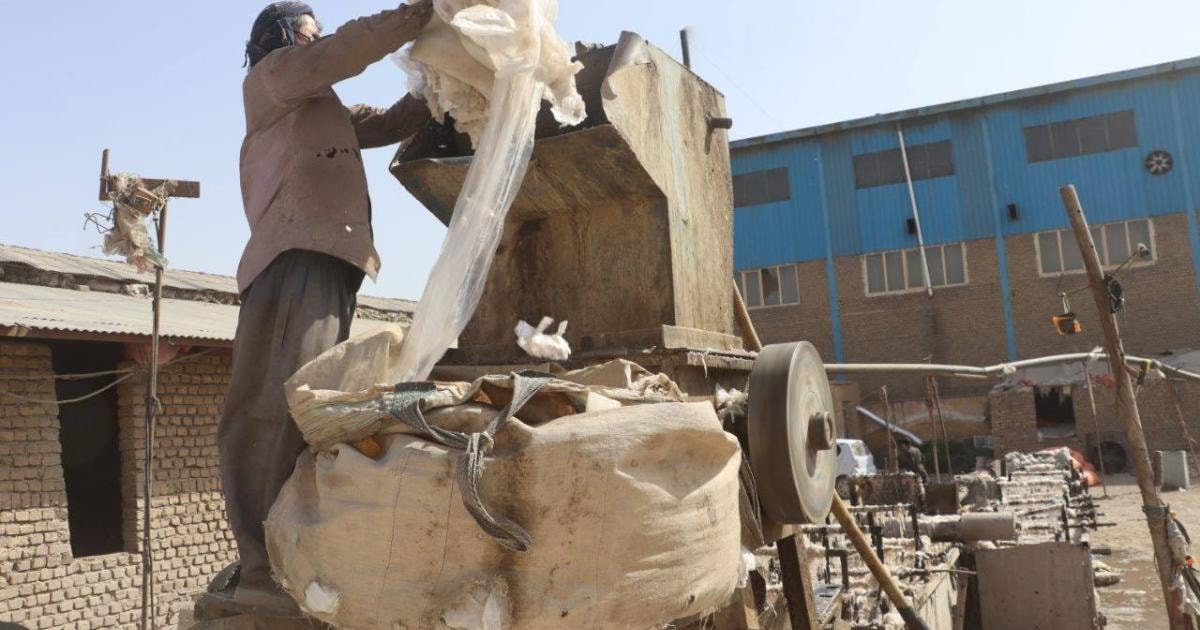
One tire recycling factory operates in the “Green Industries” industrial town in Kabul. In this factory, hundreds of worn-out tires are accumulated, and workers, amidst the strong smell of rubber and the noise of shredding and melting machines, prepare them for recycling. By melting old tires, the factory produces products such as bitumen, coal, wire, and nails, employing hundreds of people.
Aziz Khan Khuruti, the manager of this factory, says that about 40 tons of tires are brought to the facility daily for recycling, and nearly 200 people work in its various sections. He emphasizes that if the produced bitumen is used in domestic road construction projects, investment capacity will increase and more job opportunities will be created.
Alongside Kabul, the city of Herat has also become an important recycling hub in Afghanistan. Dozens of factories in the province’s industrial town operate in plastic and metal recycling. Abdul Qadeer Amiri, one of the industrialists in this sector, says that up to 10 tons of plastic waste are recycled daily in his factory, providing employment opportunities for dozens of young people.
Environmental experts in Afghanistan warn that burning tires and plastics produces toxic gases and increases respiratory diseases. Therefore, expanding the recycling industry is considered an important measure to reduce air pollution and protect the environment. However, the lack of modern waste management systems and the absence of a source-separation culture remain major challenges in this sector.
Overall, the recycling industry in Afghanistan is becoming an emerging economic chain—starting from the collection of waste in cities and continuing to its transformation into usable materials in factories. Although this industry is still in its early stages, for many investors, waste is no longer a discarded material but a source of production, employment, and income.
Writer:Salima Aryaei