Monica Witt: From U.S. Air Force Counterintelligence Specialist to Defection in Iran
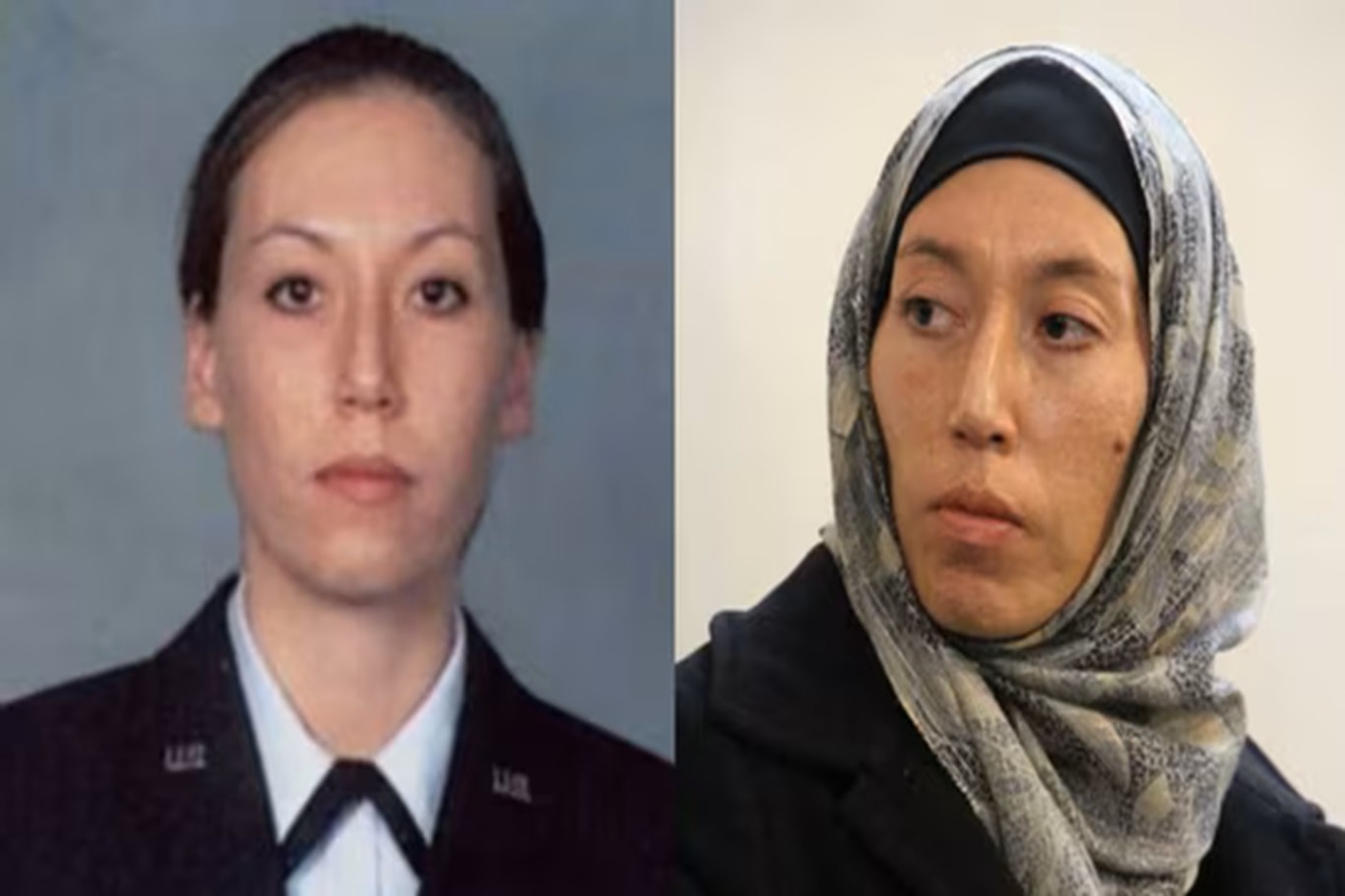
Monica Witt, a former counterintelligence specialist with the United States Air Force, successfully obtained an Iranian visa in 2013 at the age of 34. According to a report by The Times, she had spent months trying to secure the visa. After it was issued, she sent a message to her contact in Tehran announcing that she was leaving the United States and “returning home.”
The report states that before her trip to Iran, individuals linked to the Islamic Revolutionary Guard Corps (IRGC) had gradually identified and recruited her, and the process of training her for intelligence-related activities had already begun.
The significance of Monica Witt’s case stems from the level of access she had to sensitive U.S. information. She had knowledge of the identities of American intelligence sources in Iran and was familiar with methods of intercepting foreign communications. For this reason, some sources have described her defection to Iran as one of the most significant cases of intelligence betrayal in modern American history.
More than a decade after the event, and amid rising tensions between the United States, Israel, and the Islamic Republic of Iran, some experts believe she may still hold intelligence value for Iran. In this context, some analysts refer to her as an individual with significant potential influence in the intelligence domain.
A senior official from Donald Trump’s first administration stated that Monica Witt “is probably still occupying the minds of FBI and CIA officials.” Some experts also believe that her familiarity with U.S. intelligence structures could be useful in certain analyses and security assessments. Douglas Wise, former Deputy Director of the Defense Intelligence Agency, previously assessed that her ability to harm the United States, on a scale of one to ten, was around seven or eight.
Monica Witt, who is reported to be alive and living under protection in Iran, was born in 1979 in El Paso, Texas. In 1997, after her mother’s death and cutting ties with her family, she joined the U.S. Air Force. She served as a cryptologic language analyst in the airborne electronic surveillance unit in Nebraska and received several honors, including the Air Medal.
She was later sent to the Defense Language Institute in California to study Persian (Farsi). In 2002, she was deployed to Saudi Arabia, and in 2005 she spent about six months in Iraq — a period considered one of the most intense years of the Iraq War. During this time, she became interested in Islam and began studying the Quran.
Witt left the Air Force in 2008, earned her bachelor’s degree from the University of Maryland, and worked for several national security contractors. In 2011, she enrolled in the Middle East Studies program at George Washington University. According to some classmates, she was angry and disillusioned during that period.
Corey Ellis, one of her classmates, told The Times that Witt spoke about her service experiences and what she considered “war crimes,” referring to the use of drones and drone imagery. These comments were made around the time the United States conducted a drone strike in Yemen against Anwar al-Awlaki, the U.S.-born cleric and al-Qaeda member.
In 2012, Monica Witt was invited to Tehran to attend a conference titled “International Conference on Hollywoodism.” The conference was organized by the New Horizon Organization and focused on how Iran is portrayed in American cinema. The U.S. government later sanctioned this Tehran-based organization for its ties to the IRGC’s Quds Force. During this trip, she met with representatives of the IRGC and discussed her desire to seek asylum.
She then established contact with Marzieh Hashemi, a journalist born in Louisiana who had moved to Iran. The U.S. government has identified her as a recruiter for the IRGC. In an interview with Iranian state television during the same trip, Monica Witt stated that she had initially read the Quran to better understand the enemy, but later concluded that Islam was not a violent religion as she had been taught in the U.S. military.
Classmates said that after returning to George Washington University, she began wearing a hijab and announced that she had converted to Islam. In the following year, she continued her contact with Marzieh Hashemi and tried to obtain a tourist visa through the Iranian embassy in Dubai. In June 2013, she sent a message saying she intended to use her military training for “good” instead of “evil,” and that if her efforts failed, she might make the matter public.
Two months later, Monica Witt received her Iranian visa and traveled to Tehran via Dubai. Following this, federal investigations into her began, and she was given the code name “Rebel Crow” in the case. According to the indictment, Iranian officials provided her with an apartment and computer equipment to facilitate her activities. From the time she joined the Air Force in 1997 until around 2010, she held Top Secret security clearance.
Reports also indicate that in 2016, during the brief detention of ten U.S. Navy sailors by Iran, she participated in some of the interrogations. Security experts believe she may have helped identify individuals connected to sensitive projects targeting Iran.
Some analysts say her access to counterintelligence information may have provided significant value to the other side. Douglas Wise told The Times that she worked at the heart of America’s counterintelligence structure and could play an effective role in analyzing fragmented information.
Monica Witt remains a fugitive in the eyes of the United States and is on the FBI’s wanted list. The FBI has offered a $200,000 reward for information leading to her arrest. According to the FBI, she is fluent in Persian, is likely living in Iran, and may use the aliases “Fatima Zahra” or “Narges Witt.”
U.S. officials claim that by transferring national defense, security, and classified programs, she has placed the country at risk. In contrast, some reports suggest she may still be involved in activities related to Iranian intelligence structures.
In recent years, efforts to recruit American citizens and other foreign nationals for intelligence cooperation in the region have increased. It is said that the IRGC’s Quds Force has used some international conferences and events as platforms for networking and recruitment.
Jason Brodsky, policy director of the United Against Nuclear Iran organization, has stated in this regard that the “New Horizon Organization” was one of the entities operating as a recruitment hub for the IRGC.
Writer:Salima Aryaei