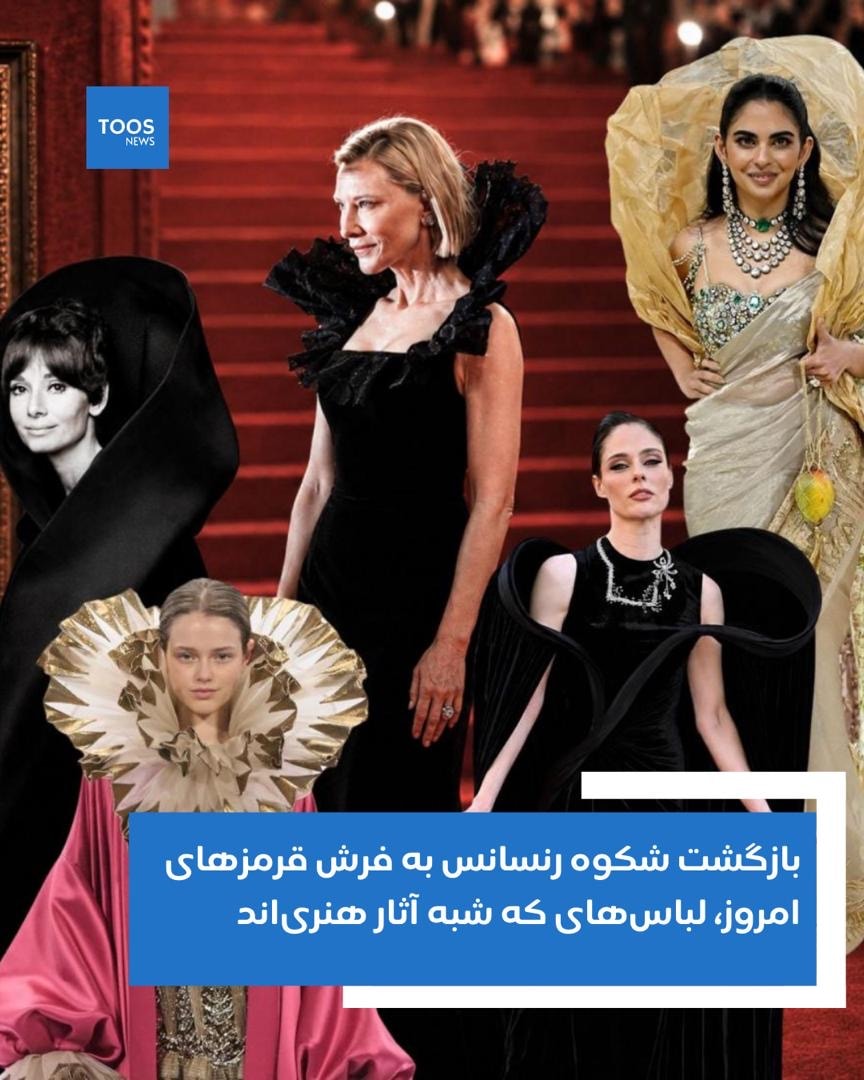
From the Cannes Film Festival to the Met Gala and Paris Haute Couture Week, one striking element has appeared repeatedly in many of this year’s most talked-about fashion looks: collars and sculptural structures that rise from the back of the neck, frame the face, and lend a dramatic presence to a garment.
In the looks presented by figures such as Coco Rocha and Cate Blanchett, this form was no longer merely a tailoring detail but became the central design feature of the outfit itself a structure that transforms the body into a work of art and evokes the grandeur, authority, and luxury of European fashion history.
The roots of this trend can be traced to the Medici collar, one of the most recognizable garment forms of the late Renaissance period. This tall, standing collar rose from the back of the neck and extended around both sides of the head, typically paired with an open neckline at the front.
The collar takes its name from Marie de’ Medici, Queen of France and a member of Florence’s powerful Medici family. In many seventeenth-century royal portraits, she is depicted wearing magnificent high lace collars, becoming a symbol of this style.
During the sixteenth and seventeenth centuries, such collars served more than a decorative purpose. They symbolized social status, power, and aristocracy. By framing the face like a portrait, these elevated collars directed attention to the wearer’s features. Clothing was not simply attire; it was a tool for displaying authority and social prestige.
Historically, the Medici collar is also linked to the Elizabethan ruff the famous circular, starched collar that encircled the neck and emphasized the face. While the Medici collar is softer and more open than the ruff, both share the same underlying concept: framing the face and creating a formal, theatrical, and commanding appearance.
In the past, these collars were crafted from expensive fabrics, handmade lace, and materials available only to the aristocracy. This association with exclusivity is one reason they continue to symbolize luxury and grandeur in contemporary fashion.
Today, designers are once again embracing this historic form. Raised collars lend garments a theatrical and opulent quality, separating the face from its surroundings and creating a striking visual presence. As a result, they are especially common on red carpets, at opera events, and in haute couture presentations.
From a design perspective, this structure does not always appear as a traditional collar. Sometimes it extends from the bodice, sometimes from a cape or sleeves, and at other times it exists somewhere between a collar, a scarf, and an architectural construction. Its height can range from a simple extension behind the neck to a full frame surrounding the face.
The appeal of this form lies in its versatility. When made from delicate materials such as chiffon, lace, tulle, or organza, it presents the face like the center of a flower. When constructed from heavy satin, taffeta, velvet, leather, or reinforced materials, it resembles a crown, armor, or ceremonial attire. Many contemporary interpretations exist somewhere between these extremes neither entirely soft nor completely rigid.
This structure is not limited to European fashion history. Similar forms can also be found in the work of some Asian designers, particularly Indian designers, who draw inspiration from architecture, courtly traditions, flowers, crowns, and traditional dress. In these creations, the raised collar becomes not only a historical reference but also an artistic and symbolic element.
In the age of social media and image-driven culture, the red carpet depends more than ever on creating memorable visual moments. Face-framing collars are among the most effective tools for producing such images.
Since the seventeenth century, the Medici collar and its modern interpretations have conveyed a common message: the face should be seen, but not in an ordinary way. It should appear within a frame of grandeur, fantasy, distance, and power. Perhaps that is why this historic form continues to return to fashion, each time taking on new meaning while demonstrating that clothing can still speak about beauty, authority, and spectacle.
Writer:Salima Aryaei