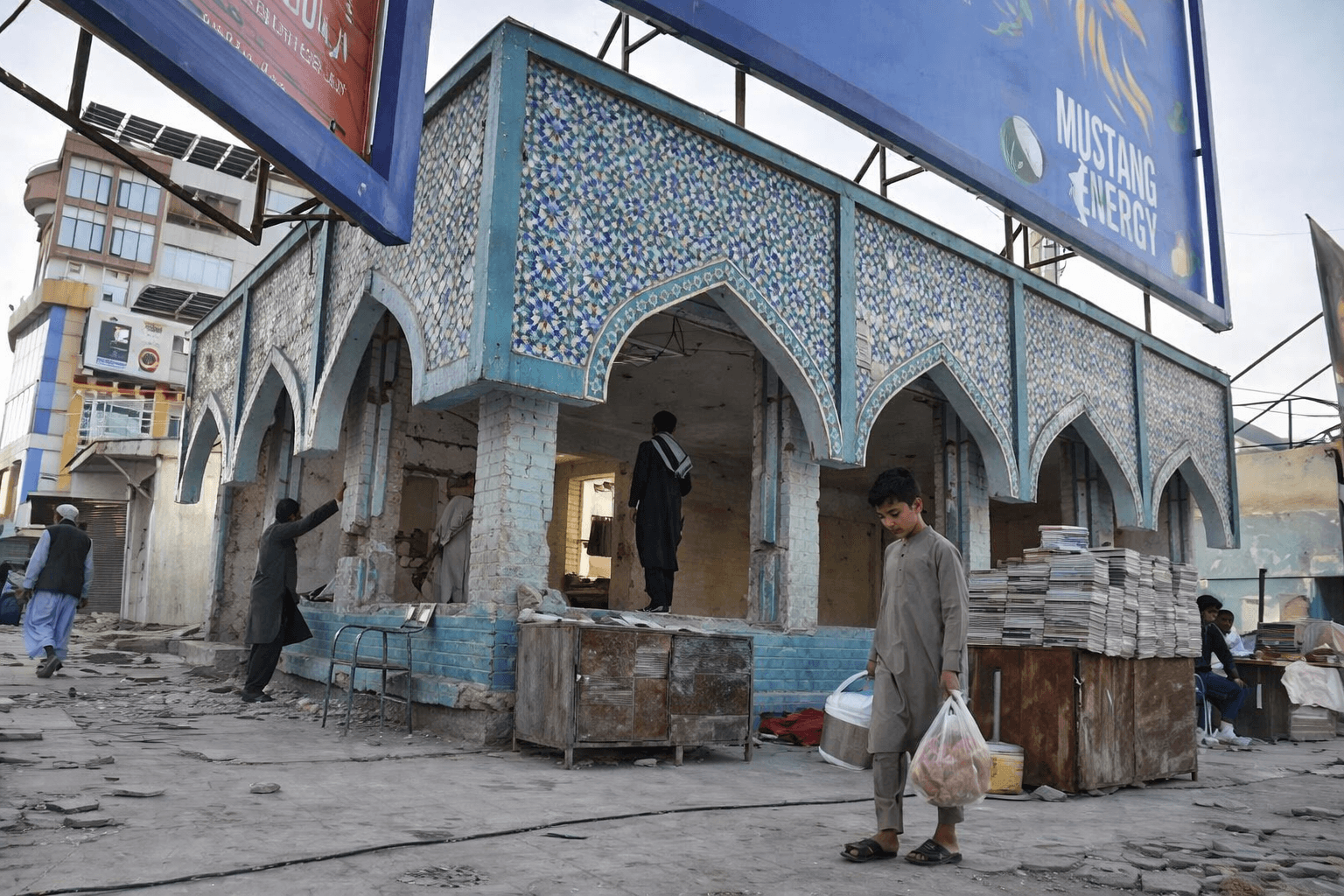
Local sources in Balkh Province say that the Taliban have demolished the Beihqi historical Bookshop building in the city of Mazar-i-Sharif in order to construct a commercial market. According to these sources, the area had previously been under the control of the provincial Department of Information and Culture, but demolition began after it was handed over to the Taliban municipality.
Sources reported on Thursday, 11 July, that in addition to the Beihqi Bookshop building, the Taliban municipality also demolished more than 22 adjacent shops. According to them, shop owners were given only one day to remove their belongings from the site.
Based on published information, the Taliban municipality has stated that a commercial market will be built on the site of these structures. Local sources say demolition began before the construction contract for the project had been finalized with bidding companies.
One shopkeeper in the area said that at least 22 shops were destroyed, noting that the land covered approximately 500 square meters and had been under the control of the provincial Department of Information and Culture for years.
According to a local source, the Taliban municipality also plans to demolish the building of the Salam telecommunications network and the post office in the area. The source added that evacuation orders have already been issued for both buildings.
The Beihqi Bookshop was considered one of the well-known and symbolic landmarks of Mazar-i-Sharif. Featuring Islamic-style architecture, blue tilework, and miniature paintings, it closely matched the architectural style of the nearby shrine complex, and experts estimate its age at nearly a century.
Following the incident, the Human Rights Activists Union issued a statement describing the destruction of the historic building as a worrying example of the ongoing erasure of cultural heritage and historical memory in Afghanistan. The organization emphasized that the loss of the Beihqi Bookshop is not merely the demolition of a structure, but the removal of part of the cultural and historical identity of Mazar-i-Sharif.
The union also warned that targeting cultural landmarks poses a serious threat to cultural rights, the preservation of historical artifacts, and the collective identity of the Afghan people, calling on international organizations to pay attention and take urgent action regarding the destruction of cultural heritage in the country.
Writer:Saeed Sameer