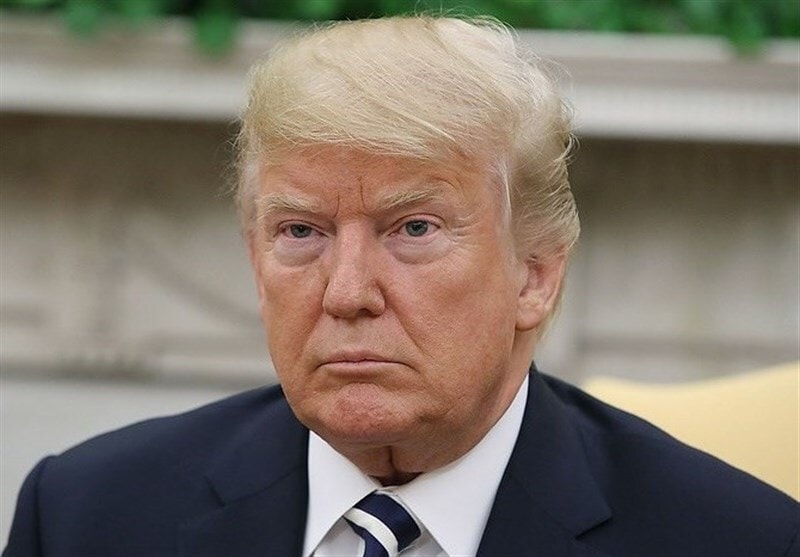
U.S. President Donald Trump has announced that the Strait of Hormuz will remain open and that the United States will not allow the strategic waterway to be closed. In a post on his social media platform, Truth Social, Trump wrote: “The Strait of Hormuz is open, and with or without Iran, it will remain open.” He also announced the return of a blockade on Iranian ports, claiming that the move would prevent ships and Iran’s customers from entering and leaving the country.
Trump further stressed that other countries would continue to have free and fair access to the Strait of Hormuz. He said that the United States would henceforth be known as the “guardian of the Strait of Hormuz” and claimed that, in exchange for ensuring the security of this maritime route, Washington would receive 20 percent of transportation costs for cargo passing through the strait.
Speaking to Fox News on Monday, 22 Saratan, the U.S. president also said that Washington would likely take control of and oversee the Strait of Hormuz. He added that the United States would assume responsibility for protecting the waterway and that countries benefiting from its security should pay for these services.
In another part of his remarks, Trump claimed that Washington and Tehran had previously reached an agreement, but that Iran had violated it. He said the United States had reached several agreements with Iran in the past, but alleged that they had repeatedly been breached, warning that Washington’s response would be severe if such a situation occurred again.
The U.S. president also claimed that Iran had lost a significant portion of its military capabilities. He said that Iran’s navy, air force, and a large part of its air defense systems no longer possessed their previous level of strength.
Reuters has reported that the Strait of Hormuz, one of the world’s most important oil transit routes, has once again become a major point of tension between Iran and the United States. According to the report, any disruption to shipping through the waterway could cause major volatility in global energy markets and lead to a sharp rise in oil prices.
In response, Iran’s Islamic Revolutionary Guard Corps (IRGC) stated that the only way for normal shipping through the Strait of Hormuz to resume would be for U.S. military intervention in the waterway to end. The group warned that continued U.S. military presence and involvement could trigger a broader crisis in global oil and gas markets.
Meanwhile, military tensions between Iran and the United States have escalated since the end of last week. Reciprocal missile and drone attacks by both sides have created further uncertainty over the prospects for a temporary agreement to reopen the Strait of Hormuz and halt hostilities during the ongoing 60-day negotiations.
Writer:Salima Aryaei