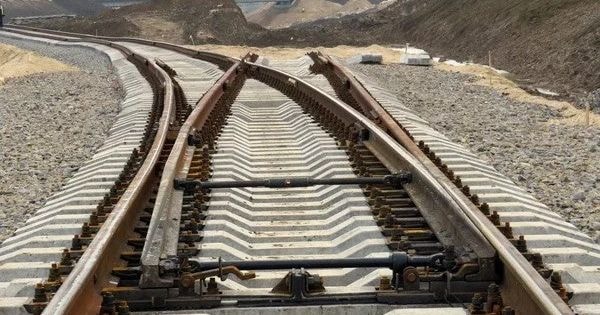
Jasurbek Choriyev, Deputy Minister of Transport of Uzbekistan, announced that the cost of the Trans-Afghan railway project has increased based on new assessments and may exceed $7 billion. This comes despite earlier estimates placing the project’s implementation cost at around $4.6 billion.
The news agency Interfax reported that Mr. Choriyev made these remarks on the sidelines of the Tashkent International Investment Forum, stating that the technical and economic feasibility studies for this major project will be completed by the end of 2026.
According to information published by Uzbekistan’s Ministry of Transport, the implementation of the Trans-Afghan railway project will take at least five years. Officials in the country say technical assessments are still ongoing, and final details will be determined upon completion of the studies.
The Deputy Minister of Transport of Uzbekistan also announced ongoing discussions with potential partners from the United Arab Emirates and Qatar, noting that this railway route would provide the shortest access to Pakistan’s port of Karachi. He added that the project would also facilitate connectivity between India and Central Asia as well as the Commonwealth of Independent States (CIS).
Choriyev further stated that the Eurasian Development Bank has expressed readiness to participate in financing the project. According to him, the transit corridor is expected to have an annual cargo transport capacity of nearly 20 million tons.
Uzbek President Shavkat Mirziyoyev had previously emphasized the importance of advancing the Trans-Afghan railway project at the fifth Tashkent International Investment Forum. He stated that the country is actively working on developing this transit route, which would provide direct access to southern seaports.
Earlier, Russia also announced its readiness to participate in the implementation of the Trans-Afghan railway project. This project, regarded as one of the most important regional connectivity initiatives, is expected to play a significant role in expanding trade and transportation between Central Asia, Afghanistan, Pakistan, and South Asian markets.
Writer:Salima Aryaei