Iranian Media Reports 417 Million Cubic Meters of Water Entered Sistan and Baluchestan from the Helmand River
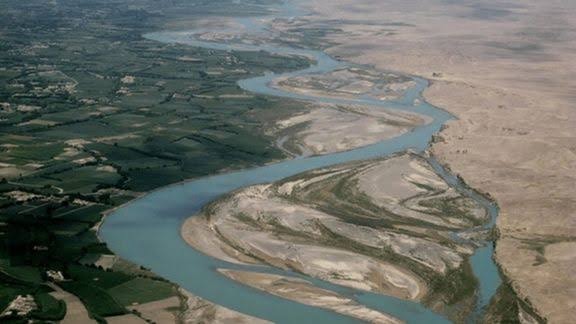
Iranian state-affiliated news agency Fars News has reported that 417 million cubic meters of water from the Helmand River have flowed into Iran’s Sistan and Baluchestan Province. According to the report, the volume of water entering the province’s Chah-Nimeh reservoirs nearly doubled between late March and early June. However, it remains below the amount Iran claims it is entitled to receive under the bilateral water-sharing agreement.
In a report published on Saturday, June 6, Fars News stated that the water entered the northern parts of Sistan and Baluchestan from Afghanistan and has helped meet part of the region’s water demand.
The agency further claimed that Afghanistan has experienced one of its wettest periods in recent years, with widespread rainfall in several regions causing severe flooding and substantial damage.
According to the report, the Helmand River Treaty, signed between Afghanistan and Iran in 1973, obliges Afghanistan to provide Iran with 850 million cubic meters of water annually.
Meanwhile, Taliban officials have not yet issued any official statement regarding the volume of water released toward Iran or the claims made in the Iranian media report.
The issue of the Helmand River water rights has remained one of the central topics in discussions between the Taliban administration and the Islamic Republic of Iran in recent years. Despite numerous meetings and negotiations, Iranian officials have repeatedly emphasized that they expect the full implementation of Iran’s water entitlement from the Helmand River.
At the same time, statistics released by Iran’s Ministry of Agriculture indicate that a significant portion of the country’s water consumption in the agricultural sector is wasted. According to these figures, approximately seven out of every ten liters of water used in agriculture are lost, while only three liters are utilized effectively.
Mohammad Hob Vatan also stated that the limited adoption of modern irrigation technologies and water-efficient farming methods has reduced water productivity in Iran’s agricultural sector, making it one of the country’s major water management challenges.
Writer:Salima Aryaei