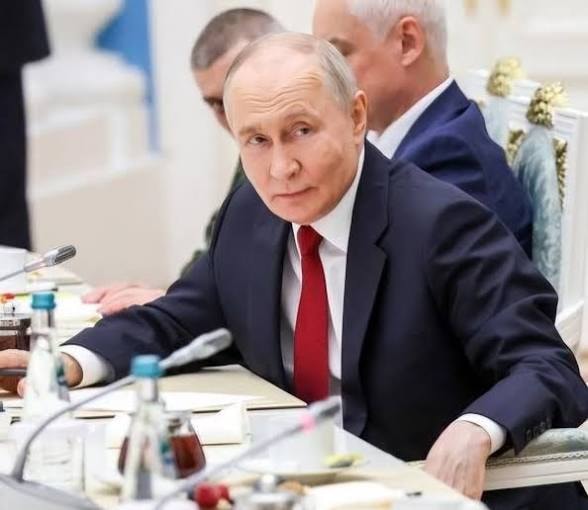
Russian President Vladimir Putin, during a meeting with Russian military personnel, announced that Moscow is extensively developing artificial intelligence-powered drones and considers this technology one of its most important current priorities.
Referring to the Russia–Ukraine war, Putin emphasized that Russia is simultaneously strengthening various air defense systems to address the evolving challenges of the modern battlefield.
The Russian president stated that drones have become one of the most influential factors in contemporary warfare, noting that military commanders provide daily reports on threats posed by this technology as well as measures to counter them.
He described the development of advanced drone technologies as a strategic mission and added that, alongside the Ministry of Defense and defense industries, other governmental and civilian institutions are also participating in this effort.
Putin further stressed the need for substantial financial support for defense projects and the reduction of bureaucratic obstacles. He called for the creation of favorable conditions for public and non-governmental entities involved in the defense sector to accelerate the production of new military equipment.
According to the Russian president, the government will continue funding and procuring equipment required by the armed forces under state defense contracts, with priority given to high-demand systems needed on the front lines.
Military experts believe that the widespread use of reconnaissance and attack drones in the war in Ukraine has fundamentally transformed the nature of military conflict. Low-cost drones have repeatedly succeeded in striking high-value targets, including ammunition depots, radar systems, and air defense equipment, prompting countries around the world to increase investment in counter-drone technologies and advanced unmanned systems.
Analysts argue that the development of AI-enabled drones could pave the way for a new generation of warfare, in which such systems may be capable of identifying, prioritizing, and, in some cases, engaging targets without direct human control.
However, experts warn that the proliferation of these technologies raises concerns not only about enhanced operational capabilities but also about potential AI-related errors and the intensification of global arms competition.
In recent months, reports have also emerged regarding Russia’s deployment of new generations of drones featuring more advanced navigation and guidance capabilities, highlighting Moscow’s growing focus on cutting-edge military technologies as the conflict in Ukraine continues.
Writer:Salima Aryaei