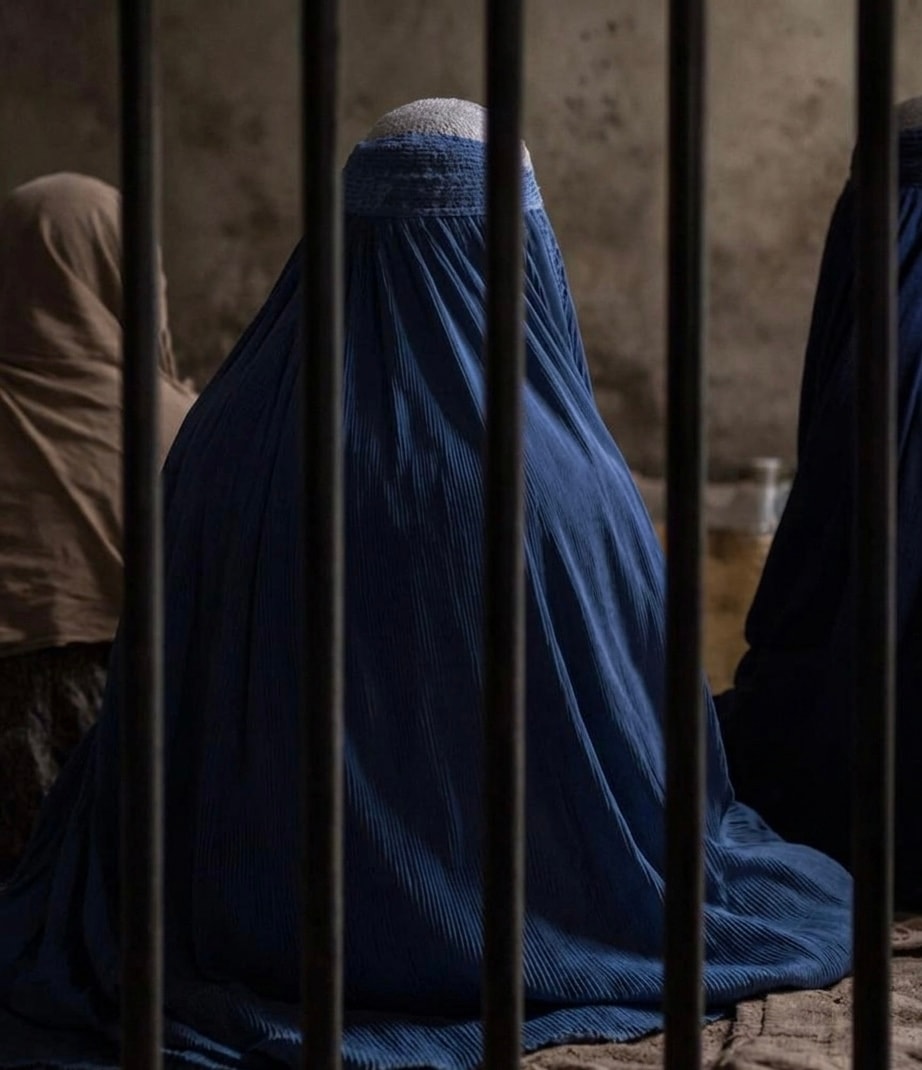
Local sources in Afghanistan’s Takhar Province report that women detained in the Taliban’s central detention facility are facing hard labor, psychological pressure, and prolonged uncertainty regarding the processing of their legal cases. The situation comes amid an unprecedented rise in the number of female prisoners across Afghanistan, intensifying concerns among human rights advocates.
At least four sources told media outlets that a number of imprisoned women including mothers accompanied by young children have been deprived of adequate education, essential services, and proper care.
One woman who was recently released from prison as part of an Eid al-Adha amnesty said that her period of detention, as well as that of other female inmates, was marked by forced labor and a lack of attention to their physical and psychological well-being. She stated that prisoners were compelled to perform cleaning duties and that, in some instances, women’s health conditions during menstruation were disregarded.
According to her account, one female inmate suffering from physical ailments was nevertheless required to carry out strenuous tasks, including cleaning prison toilets. She further noted that prolonged uncertainty regarding legal proceedings and a lack of information about judicial outcomes constituted one of the most severe hardships faced by detainees.
Another former inmate said that children living alongside imprisoned mothers were also subjected to difficult conditions and received insufficient attention and support.
These testimonies emerge as statistics released by the Taliban’s Ministry of Interior indicate that the number of female prisoners in Afghanistan has reached 1,825—a figure representing a significant increase compared with the period of the former republic.
According to the data, women are currently held in 34 prisons across the country. Kabul has the highest number of female inmates, with 469 prisoners, followed by Herat, Balkh, Nangarhar, and Kandahar.
The figures further show that the number of incarcerated women has risen by 18.7 percent compared with the previous year. During the republican era from 2001 to 2021, the number of female prisoners never exceeded 1,000.
At present, Afghanistan’s total prison population stands at 24,446, of whom 1,825 are women.
The Taliban do not publicly disclose details of female prisoners’ cases. However, reports from the group’s Supreme Court indicate that some women have been prosecuted and imprisoned on charges such as “running away from home” or engaging in “extramarital relationships.”
Reports by human rights organizations, including the United Nations, also suggest that the Taliban’s Ministry for the Promotion of Virtue and Prevention of Vice plays a significant role in the detention of women.
The human rights organization Rawadari has further warned that certain provisions within the Taliban’s legal framework could lead to broader criminalization of women’s behavior, including cases involving women returning to their parental homes or disputes arising from family conflicts.
Human rights activists argue that the continuation of these practices, combined with harsh detention conditions and slow judicial procedures, could have profound social and humanitarian consequences for women and their families.
Writer:Salima Aryaei