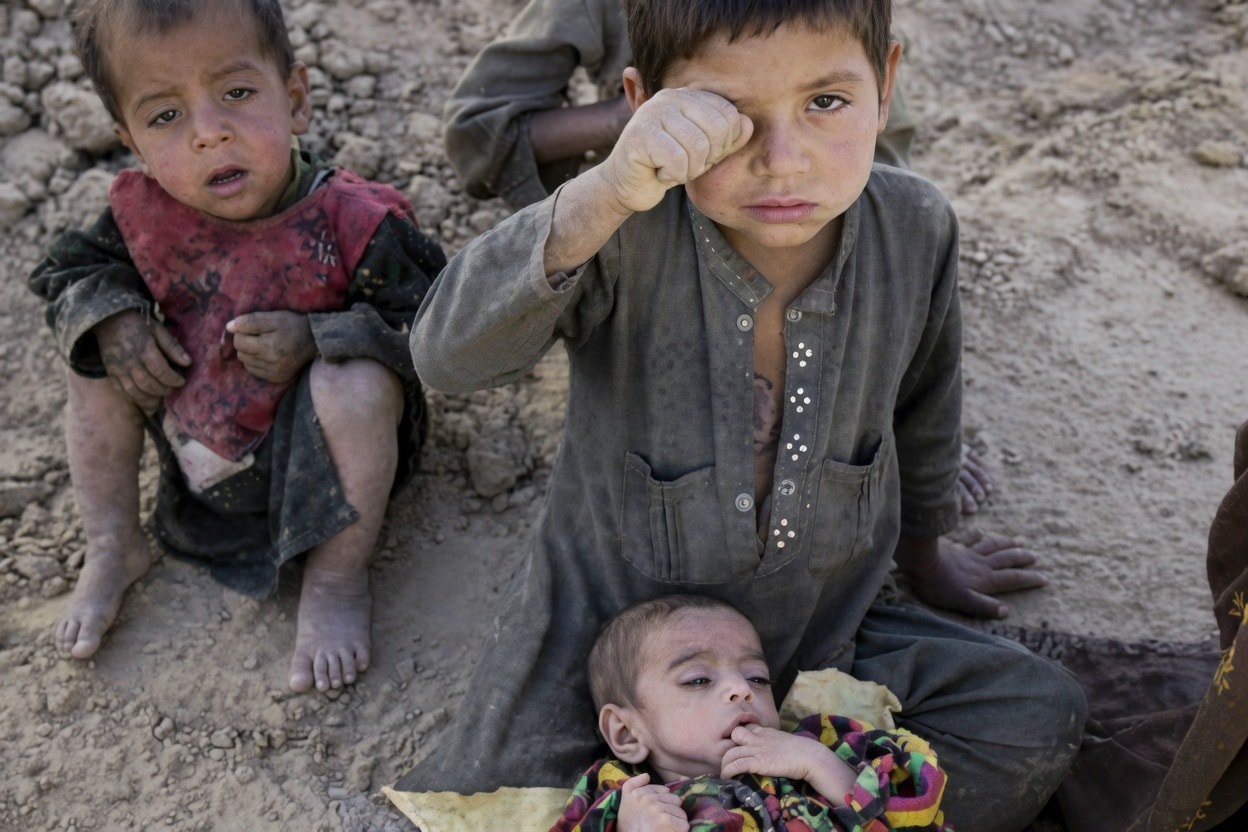
The United Nations Office for the Coordination of Humanitarian Affairs (OCHA) has stated in its latest report that Afghanistan continues to face a severe humanitarian crisis, with millions of children across the country at risk of acute malnutrition.
According to the report, an estimated 3.7 million Afghan children are expected to suffer from severe malnutrition in 2026. Humanitarian organizations warn that delayed access to healthcare services in many areas places children’s lives at serious risk and, in some cases, leads to death.
Olga Cherevko, OCHA’s head in Afghanistan, said that despite ongoing humanitarian efforts, funding shortages and difficulties in accessing remote areas have created significant challenges for aid delivery.
She noted that nearly 22 million Afghans require humanitarian assistance, yet only about 14 percent of the $1.7 billion needed for humanitarian operations has been funded. She warned that declining aid in some regions has further worsened living conditions for vulnerable communities.
The report adds that drought and water shortages, particularly in rural areas and in Bamyan Province, are among the main drivers of displacement. Many families have been forced to leave their homes due to dried-up agricultural land and a lack of safe drinking water.
OCHA also highlighted the challenges facing returning migrants and refugees, many of whom are returning to a country already struggling with a widespread humanitarian crisis. According to figures from the United Nations High Commissioner for Refugees (UNHCR), approximately 8,000 people returned to Afghanistan in a single week up to June 20.
The report further identifies restrictions on women and girls as a major factor contributing to the deterioration of the humanitarian situation. According to OCHA, these restrictions limit women’s and girls’ access to education, healthcare services, and economic opportunities.
Humanitarian agencies have also warned that the shortage of female healthcare workers particularly in maternal and child healthcare has become a serious challenge in many parts of the country.
According to United Nations data, humanitarian organizations assisted 5.9 million people in Afghanistan between January and April of this year, including 3.5 million people who received food assistance.
The United Nations emphasized that humanitarian needs remain extremely high and that millions of Afghans continue to depend on urgent and sustained humanitarian support for their survival.
Writer:Saeed Sameer