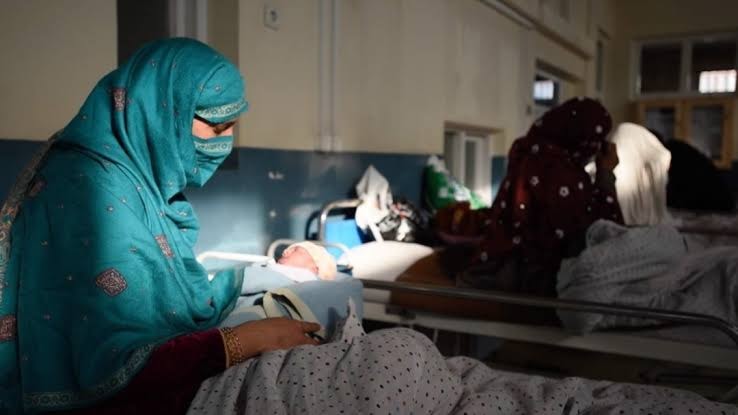
The United Nations Office for the Coordination of Humanitarian Affairs (OCHA) has once again warned about the high rate of maternal mortality in Afghanistan, stating that the country continues to have one of the highest maternal death rates in the world.
According to statistics released by the organization, nearly 600 women die for every 100,000 live births due to complications related to pregnancy, childbirth, or postpartum conditions.
In comparison, maternal mortality rates during and after childbirth are reported at 16 deaths per 100,000 births in Iran and 155 deaths per 100,000 births in Pakistan.
OCHA emphasized that investing in the training and recruitment of female healthcare workers, expanding primary healthcare services, and increasing women’s access to specialized medical care are among the most important measures for reducing maternal mortality in Afghanistan.
The organization added that providing skilled care during pregnancy and childbirth, along with the presence of female healthcare professionals, plays a crucial role in saving the lives of mothers and newborns.
According to the report, access to trained midwives and prenatal and postnatal healthcare services is among the key factors in reducing maternal mortality rates.
OCHA warned that the shortage of female healthcare workers in medical facilities causes many women either to avoid seeking medical care or to be unable to access the essential services they need.
The organization also highlighted challenges within Afghanistan’s healthcare system, noting that the lack of qualified female professionals has seriously limited women’s access to healthcare services.
Since the Taliban returned to power, extensive restrictions have been imposed on women’s education as well as their social and professional activities. According to international organizations, these restrictions have affected various sectors, including education and healthcare.
The United Nations Children’s Fund (UNICEF) had also warned in the month of Sawr (April–May) that if the current restrictions continue, Afghanistan could face a shortage of approximately 25,000 female teachers and healthcare workers by 2030.
UN-affiliated organizations believe that the continuation of this situation will not only reduce women’s participation in the healthcare sector but will also create growing challenges for millions of Afghan women and girls in accessing essential medical services.
Writer:Salima Aryaei