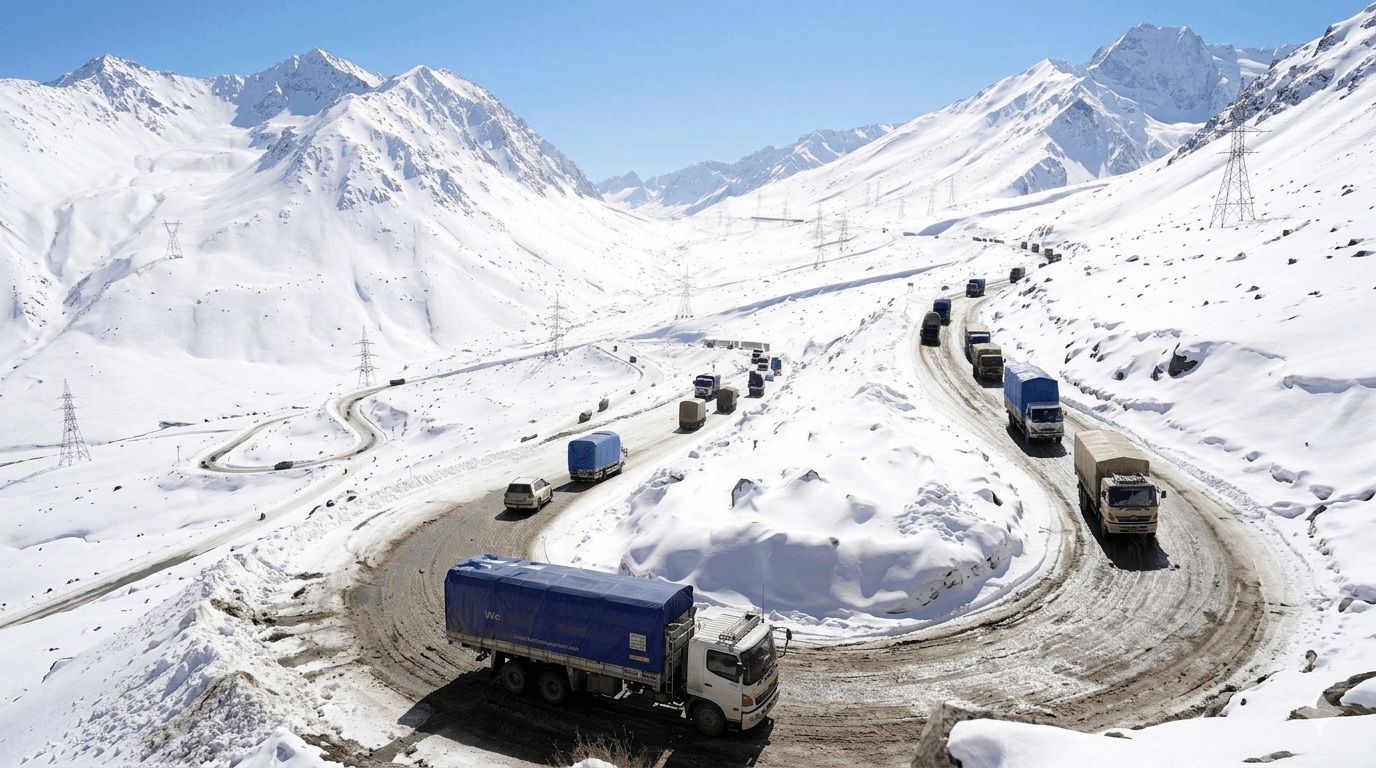
The World Food Programme (WFP) has announced that the ongoing crisis in the Middle East and the sharp rise in fuel prices have significantly disrupted the delivery of humanitarian assistance to Afghanistan. According to the organization, the transit time for aid shipments has increased from approximately 10 days to as long as 75 days, while transportation costs have risen by as much as fivefold.
The agency further noted that freight carriers have been forced to use alternative routes due to disruptions and obstacles along major commercial corridors, resulting in additional delays to the delivery of humanitarian supplies.
The WFP also stated that the joint U.S. and Israeli strikes on Iran, disruptions to maritime traffic through the Strait of Hormuz, and escalating oil prices have placed an additional 1.5 million people at risk of hunger.
According to projections released by the organization in March, if oil prices remain close to $100 per barrel, up to 45 million people could face severe food insecurity. This scenario is now increasingly becoming a reality, as crude oil prices have continued to hover around that level.
The report identifies Afghanistan, Somalia, and Sri Lanka as among the countries most severely affected by these developments. Households in these nations are grappling with rising fuel costs, increasing food prices, declining incomes, and disruptions to trade and supply chains.
In Somalia, an estimated 6.5 million people nearly one-third of the country’s population are expected to face acute hunger in 2026. The report further warns that an additional 2.5 million people in Somalia and 2.3 million people in Afghanistan could be pushed into severe food insecurity.
The World Food Programme emphasized that both Afghanistan and Somalia are heavily dependent on imported energy and food supplies, making them particularly vulnerable to fluctuations in global markets.
At the same time, funding shortages among humanitarian organizations have emerged as a major challenge, limiting their capacity to sustain relief operations. In Somalia, the agency warned that stocks of nutritious food intended for children under the age of five may be depleted by the end of July.
In conclusion, the WFP cautioned that if the current disruptions and economic pressures persist, Afghanistan could see as many as 17.4 million people suffering from food insecurity and severe shortages of essential food supplies in 2026.
Writer:Saeed Sameer