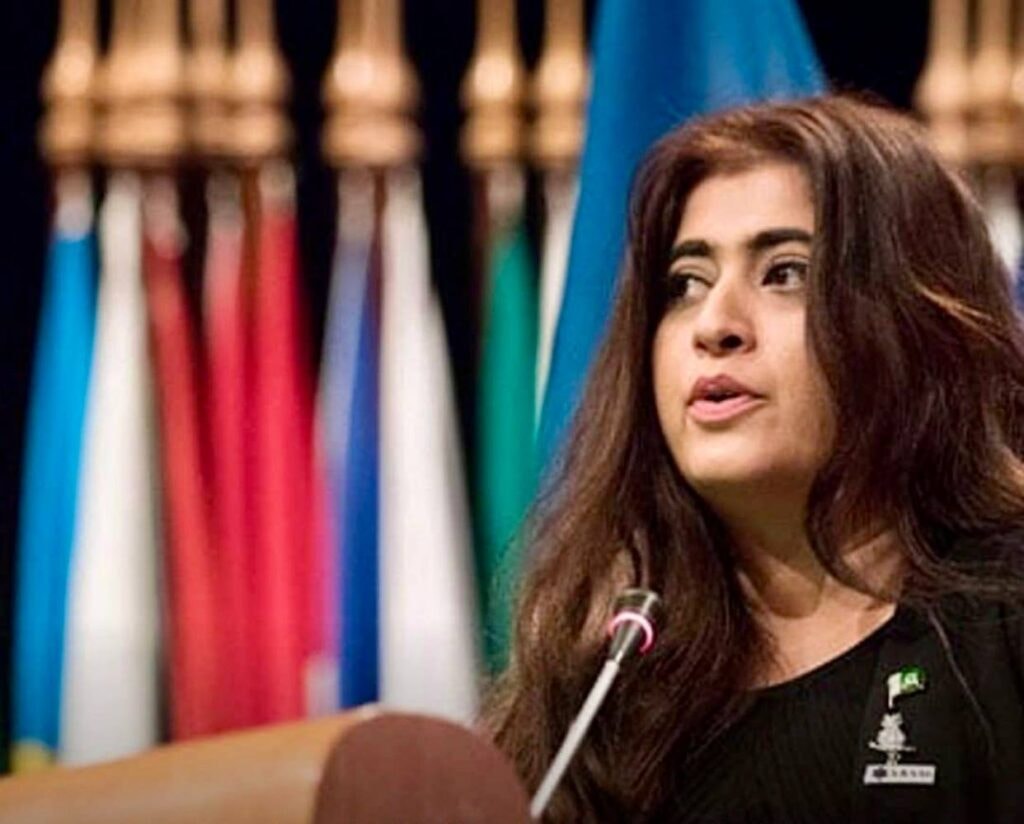
Maria Sultan, head of the South Asia Strategic Stability Institute, believes that Afghanistan may lose its current political geography in the emerging regional environment. She says that in the future, a country with the current shape and structure of Afghanistan might not exist.
In an interview with Pakistani journalist Hassan Khan, Maria Sultan stated that Afghanistan is not a “centralized unitary state” and, due to its structural characteristics, has deeply rooted tendencies toward decentralization.
The head of the South Asia Strategic Stability Institute explains that Afghanistan is more of a “border state” than a country where all matters are dependent on the center. According to her, Afghanistan’s social and geographic structure has caused many regions to maintain closer ties with their surrounding areas.
Ms. Sultan notes that regions bordering Iran, Pakistan, and Central Asian countries have deeper economic and livelihood connections across the borders, and these local ties sometimes outweigh strong political centralization. She believes that border provinces often organize their trade, social, and cultural networks with neighboring countries.
She argues that this geographic and social reality could, in the future, transform the shape of the Afghan state compared to the current situation, reducing centralization and strengthening the role of cross-border connections in guiding development.
Maria Sultan emphasizes that for effective policymaking, common assumptions about Afghanistan’s “unity” need to be reconsidered. Understanding local and regional realities can play a key role in shaping future policies.
The head of the institute also says that linking “progress” to human development and local community participation is a key factor, and achieving it requires strengthening “Afghan nationalism.” She believes that without the formation of an inclusive national identity that goes beyond regional and ethnic affiliations, efforts toward stability and sustainable development in Afghanistan will face significant challenges.
Writer:Salima Aryaei