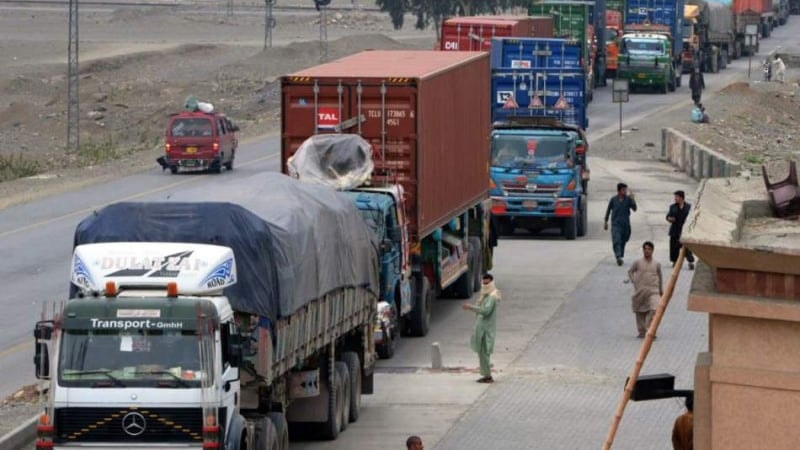
The Afghanistan Chamber of Commerce and Investment (ACCI) has told the media that recent tensions in the Middle East have affected Afghanistan’s trade and transit, and currently about 2,500 to 3,000 containers of Afghan goods, including raw materials for manufacturing factories, are stuck at the Port of Jebel Ali. According to the chamber, authorities in the United Arab Emirates (UAE) are not allowing these shipments to be loaded and transferred via the Iran route.
Khan Jan Alkozai, a member of the ACCI board, said: “Currently, about 2,500 to 3,000 containers are halted at Jebel Ali Port, and it has been ordered that they not be loaded. The situation is concerning, and the goods remain there. Previously, some traders used informal routes and small ships to transfer their cargo, but now most of these shipments have been stopped, and loading is not allowed.”
As tensions between Iran and the UAE in the Strait of Hormuz have escalated, Afghan traders’ concerns have also increased. The ACCI says UAE authorities have warned Afghan traders not to transfer transit goods through Iran.
According to the chamber, some traders have faced halted shipments and heavy fines, while others have paid high costs to transfer their cargo through alternative routes to countries such as Malaysia, Indonesia, and India.
Some economic experts say that the existing regional tensions, as well as problems between the Taliban and Pakistan, have seriously affected Afghanistan’s trade and transit. They believe that this situation has put additional economic pressure on Afghanistan’s foreign trade.
Additionally, some citizens report that due to the closure or restriction of trade routes, food prices in domestic markets have risen, increasing the financial burden on the public. They express concern about market fluctuations and shortages of certain goods.
According to several economic experts, Karachi and Gwadar ports in Pakistan, Chabahar and Bandar Abbas in Iran, and Jebel Ali in the UAE were among Afghanistan’s main transit routes. However, currently, these routes face serious restrictions due to regional tensions and insecurity.
The ACCI has stated that under the current circumstances, traders are trying to import the country’s essential goods through northern routes via Central Asian countries.
Writer:Salima Aryaei