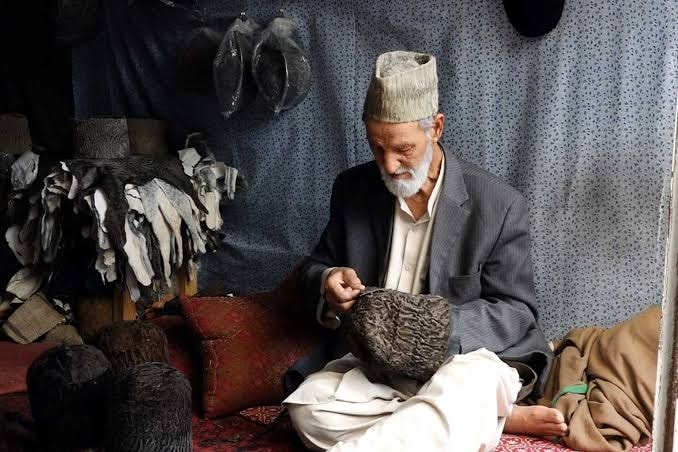
The Karakul hat market in Kunduz Province one of Afghanistan’s longstanding symbols of culture and trade is currently facing an unprecedented downturn. Artisans and traders in this sector report a sharp decline in customers, a lack of support for domestic production, and shrinking sales markets, all of which have pushed this traditional industry to the brink of obscurity.
A hat maker in Kunduz city told Aksos that public interest in purchasing and wearing Karakul hats has significantly decreased compared to previous years. According to him, while there used to be numerous orders throughout different seasons, there are now days when no sales are made at all.
He warned that if this situation continues, many craftsmen will be forced to abandon the trade altogether. He noted that in previous years, the price of Karakul hats ranged between 4,000 and 40,000 Afghanis depending on quality and color, but declining purchasing power and economic stagnation have now led to a severe drop in the market.
Meanwhile, a Karakul skin trader in Kunduz said that despite the high quality of Afghan Karakul pelts, the absence of a clear marketing and export strategy has created serious challenges for traders. He emphasized that the lack of market access means that even high-quality products are no longer profitable, forcing many traders to lose capital or suspend their activities.
An economic analyst in Kunduz also believes that the downturn in the Karakul market is not merely the result of changing consumer preferences, but rather a consequence of inadequate policy support and neglect of traditional industries. According to him, this sector, which once held a strong position in international markets, is now suffering from a lack of development planning and marketing initiatives.
Karakul has historically been one of Afghanistan’s key sources of income for livestock owners and traders and has been recognized as an important export commodity, providing employment opportunities for thousands of families.
Industry stakeholders warn that if the current trend continues without effective support, one of Afghanistan’s oldest traditional industries will continue to weaken, placing a significant portion of the country’s economic and cultural heritage at risk of extinction.
Writer:Salima Aryaei